Eyelid Surgery
Upper Blepharoplasty
(Upper Eyelid Surgery) in Melbourne
Dr Rodrigo Teixeira FRACS, Specialist Plastic Surgeon
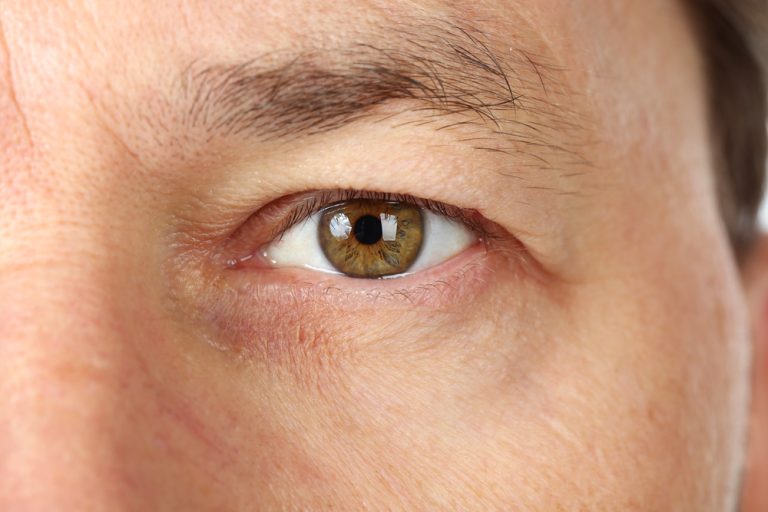
Upper blepharoplasty, or upper eyelid surgery, may be considered when excess upper eyelid skin contributes to hooding, heaviness or a less defined crease. Each operation is planned around the individual’s anatomy, with the brow, eyelid and eye assessed together rather than the eyelid skin alone.
What is Upper Blepharoplasty (Upper Eyelid Surgery)?
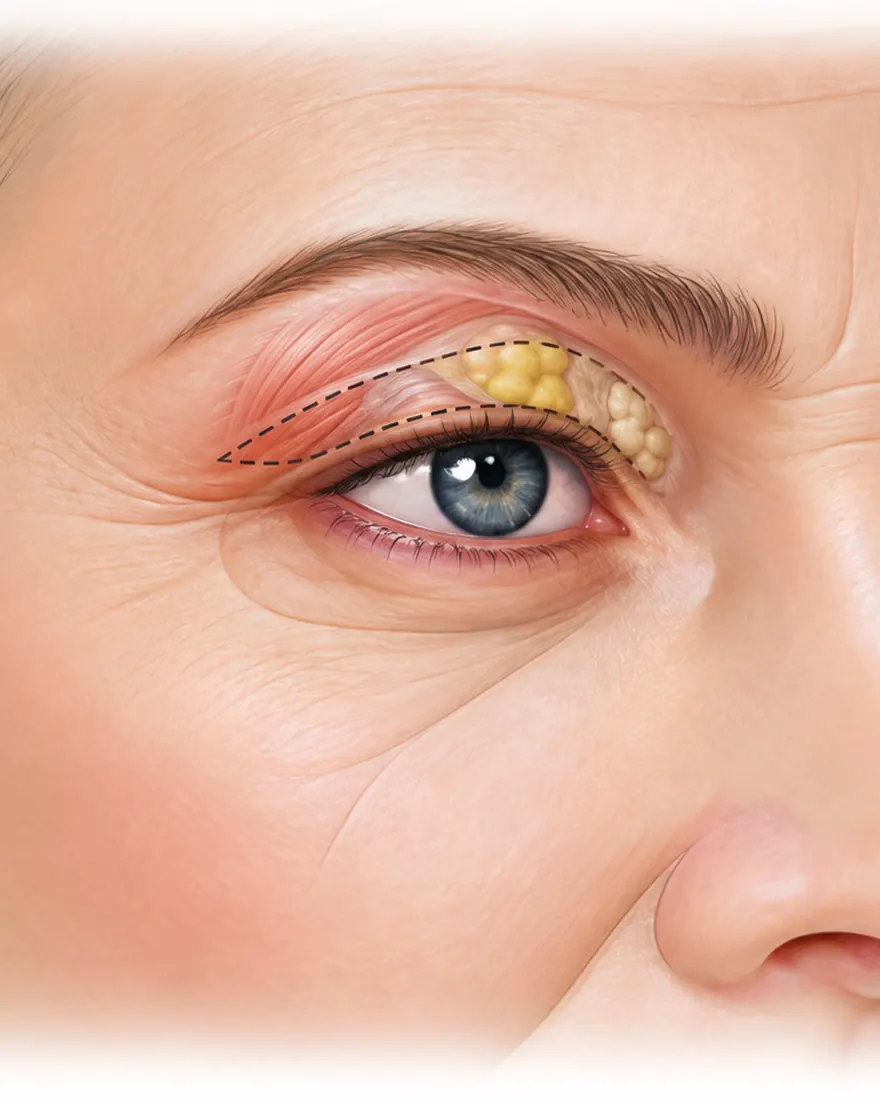
Upper blepharoplasty is a surgical procedure that may be considered to address excess upper eyelid skin and, in selected cases, adjust underlying tissue (such as muscle or fat), depending on individual anatomy. Ageing, genetics, and skin quality can contribute to upper eyelid heaviness or skin folds, which may change the appearance of the eyes or cause discomfort.
In some cases, overhanging upper eyelid skin may also affect the upper field of vision. The procedure aims to address the contributing anatomical factors and refine upper eyelid contour. Upper blepharoplasty may be considered for functional and/or appearance-related reasons, depending on individual circumstances.
For an overview of eyelid surgery options, see Eyelid Surgery in Melbourne (Blepharoplasty).

Learn more about Dr Rodrigo Teixeira, FRACS
Common upper eyelid concerns
Upper blepharoplasty may be considered for the following concerns:
- Excess upper eyelid skin that sits closer to the lashes or makes the crease less defined
- A “heavy” feeling in the upper lids, sometimes more noticeable later in the day
- Needing to raise the eyebrows to feel the eyes look more open, sometimes with forehead tension
- Makeup challenges such as eyeshadow appearing less visible, or eyeliner/mascara transferring onto the upper lid
- Asymmetry in upper lid skin folds or crease definition between sides
Suitability
Who is upper blepharoplasty suitable for?
Upper blepharoplasty is generally considered for adults whose main concern is excess upper eyelid skin, with or without a small amount of fat prominence, and whose brow position and eyelid opening are otherwise adequate. Assessment covers several things that influence planning: whether the heaviness comes from the eyelid skin, a low brow or a weak lifting muscle (ptosis), since each is treated differently; how much skin can be removed while still allowing comfortable eye closure; dry eye or other eye conditions; general health and smoking; and expectations.
Upper blepharoplasty is unlikely to be the right choice on its own when a low brow is the main cause of hooding, when there is significant untreated dry eye, or when the goal is to change the shape of the eyes rather than to address surplus skin. In those situations a brow lift, ptosis repair or a combination is discussed at consultation.
Techniques
Our Upper Blepharoplasty Surgery Techniques
Skin Excision (with or without Orbicularis Resection)
Skin excision is a common foundation of upper blepharoplasty for patients with dermatochalasis (excess upper eyelid skin). The procedure may involve a limited skin-only reduction or, in selected cases, removal of a narrow strip of the orbicularis oculi muscle to reduce heaviness and bulk. The extent of skin and muscle adjustment is tailored to eyelid thickness, redundancy, and crease anatomy, with the aim of achieving balance between improvement and a natural appearance.
Fat Management and Volume Preservation
A subtle fat bulge on the inner aspect of the upper eyelid may be treated with conservative fat adjustment. In selected patients, modern approaches often prioritise fat preservation or repositioning to reduce the risk of postoperative hollowing, particularly when there is already upper eyelid volume loss or a deep upper eyelid sulcus. Where appropriate, fat may be repositioned to support a smoother upper eyelid contour rather than simply removing tissue. The intention is to maintain structure and avoid an over-resected appearance, recognising that outcomes vary.
Tarsal Fixation (Crease Anchoring)
Creating a stable, natural-appearing eyelid crease is an important part of upper blepharoplasty for some anatomies. This may be achieved by anchoring the skin–muscle layer to deeper structures such as the tarsal plate or levator aponeurosis, so the crease moves naturally with eyelid elevation. This approach can be relevant when crease definition is limited, in some Asian eyelid procedures (double-eyelid creation), and in selected revision cases where crease definition has been lost. The aim is improved crease definition and more consistent crease formation during healing, recognising that results vary.
Adjunctive Eyelid Ptosis Repair
Where true upper eyelid ptosis is confirmed (drooping related to reduced lifting function), ptosis repair such as levator advancement or aponeurosis repair may be discussed alongside blepharoplasty. In selected cases, addressing ptosis at the same time may improve eyelid height and symmetry and can be relevant to function. Suitability depends on examination findings and individual anatomy.
Our approach
Dr Teixeira’s Surgical Approach to Upper Eyelid Blepharoplasty
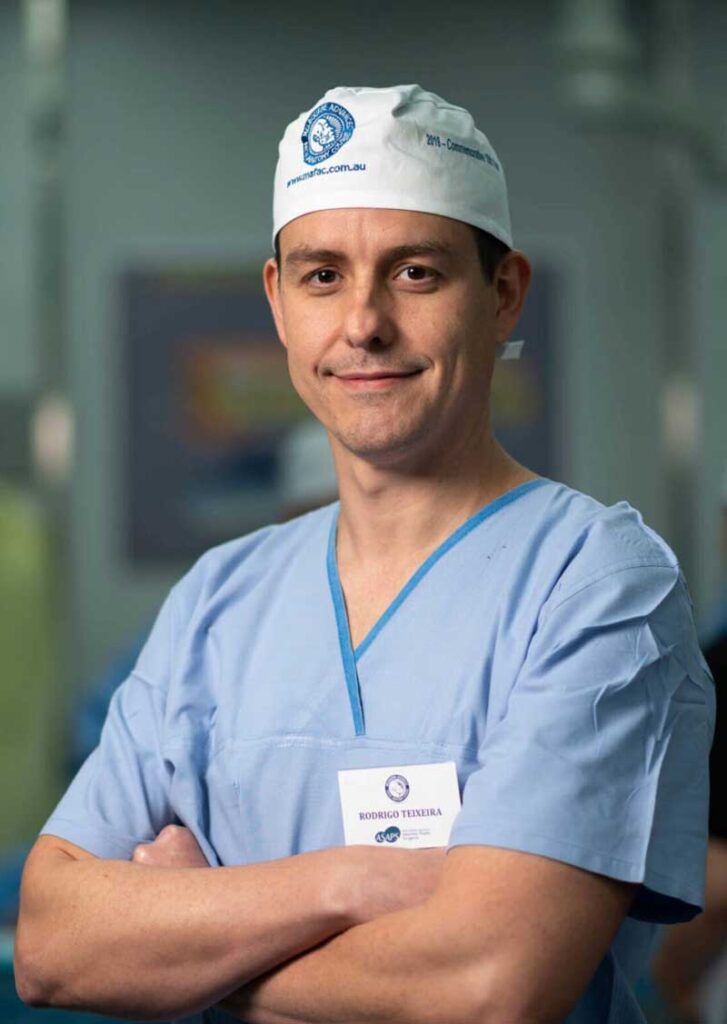
Dr Rodrigo Teixeira is a Specialist Plastic Surgeon (FRACS) with training in aesthetic and reconstructive plastic surgery. His approach to upper blepharoplasty is anatomy-led and considers how the eyelid, brow, and surrounding tissues interact. Surgical planning aims to balance form and function and maintain a natural eyelid contour.
Each procedure is tailored to individual anatomy, functional considerations, and treatment goals. Techniques may focus on tissue preservation, crease stability, and proportion, with attention to natural movement and eyelid comfort. Outcomes vary, and all decisions are guided by clinical findings and surgical safety.
Case examples: upper blepharoplasty
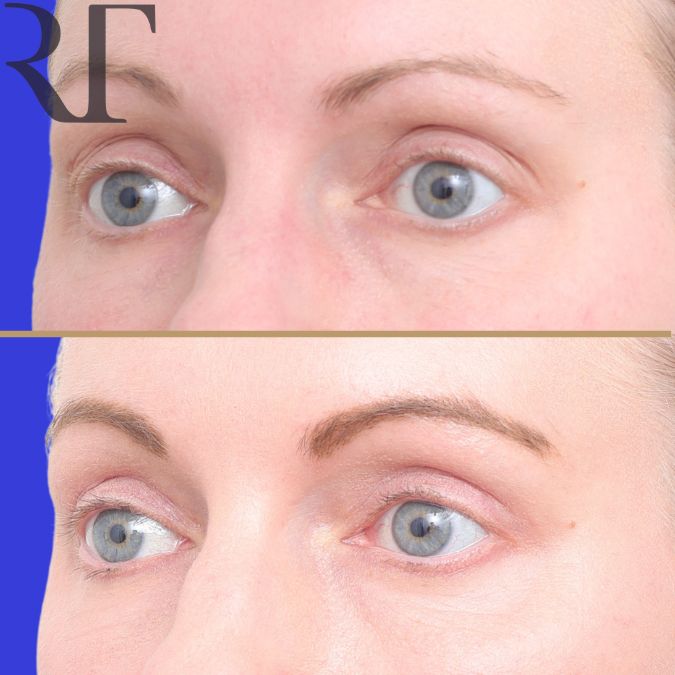
Case 1. Before and after upper blepharoplasty, shown in frontal and oblique views, with the after photographs taken three months after surgery. This is an example of a case suited to local anaesthetic in the rooms: excess upper eyelid skin was removed through incisions placed in the natural crease, with the fat preserved to keep a soft, natural contour.
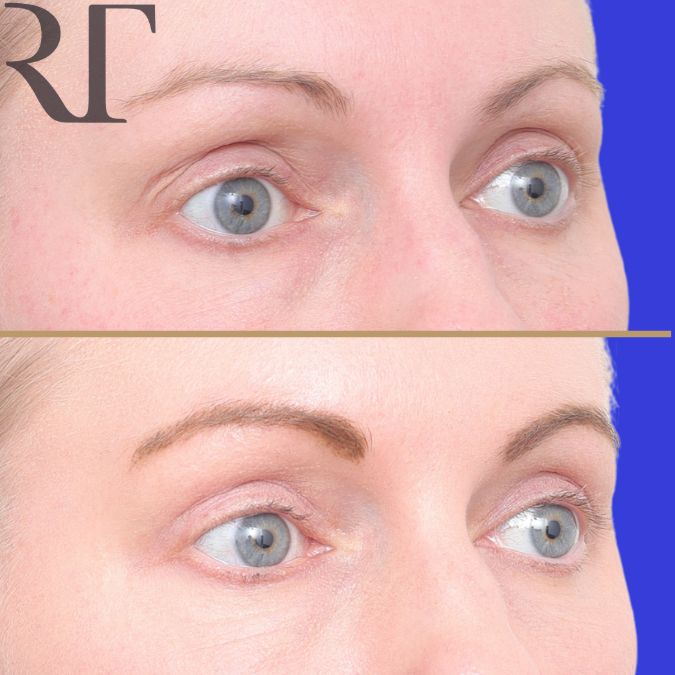
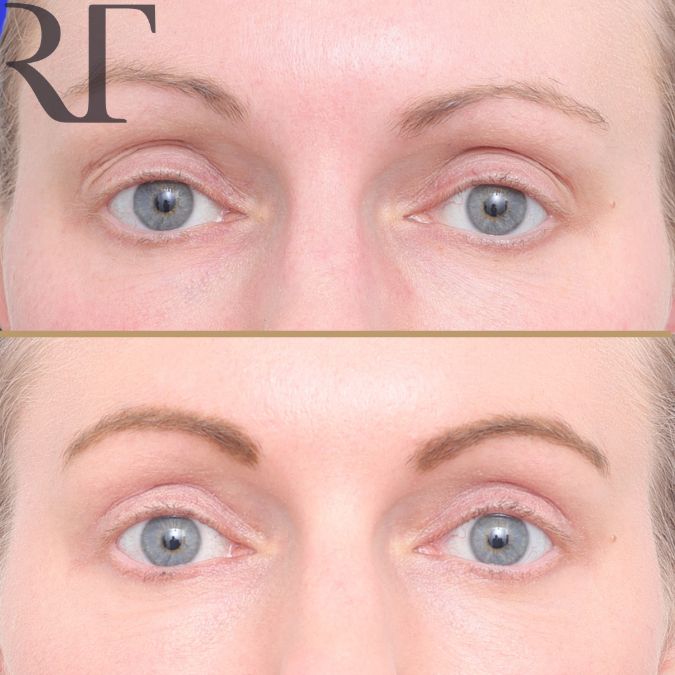
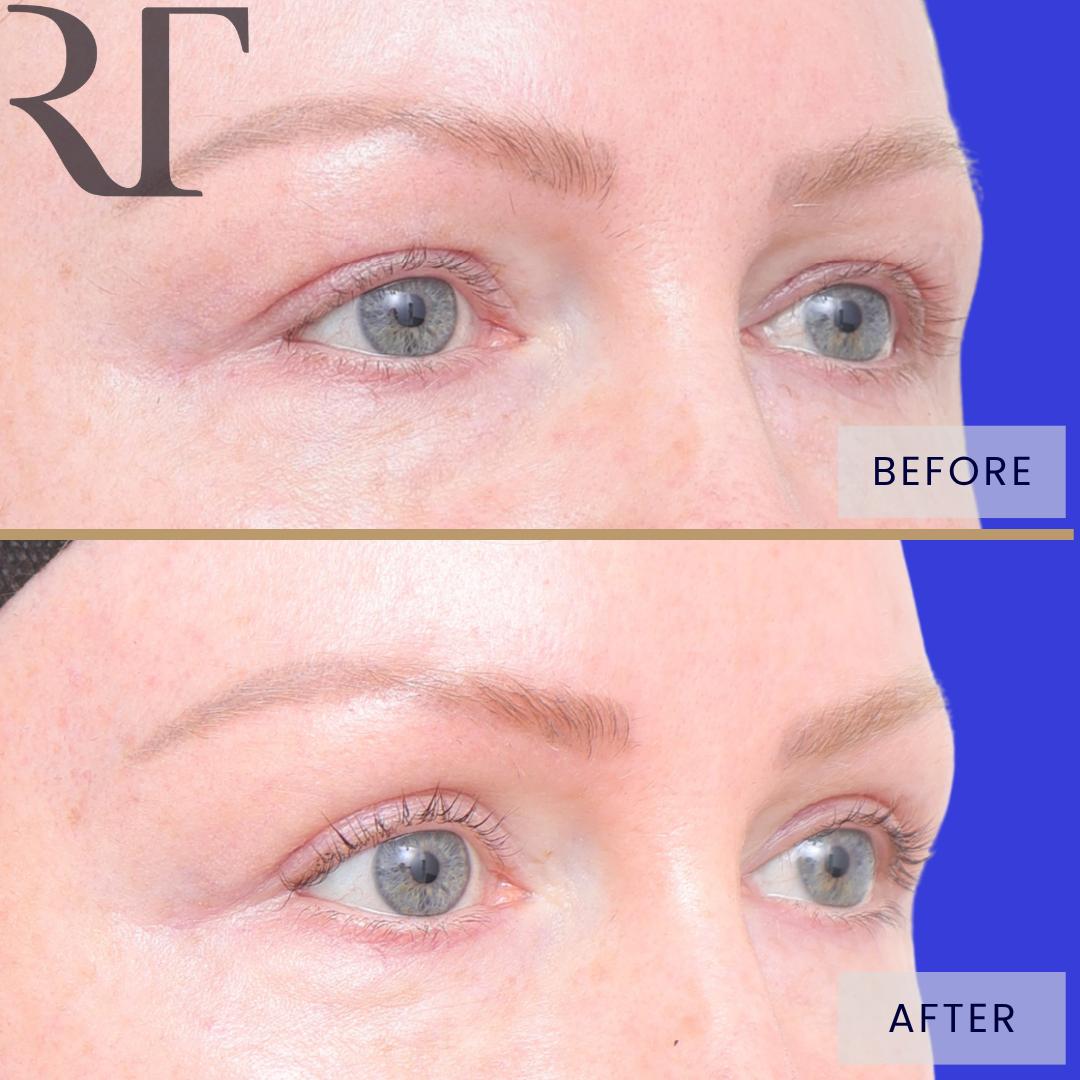
Case 2. Before and after upper blepharoplasty, shown in frontal and three-quarter views, with the after photographs taken 12 months after surgery.
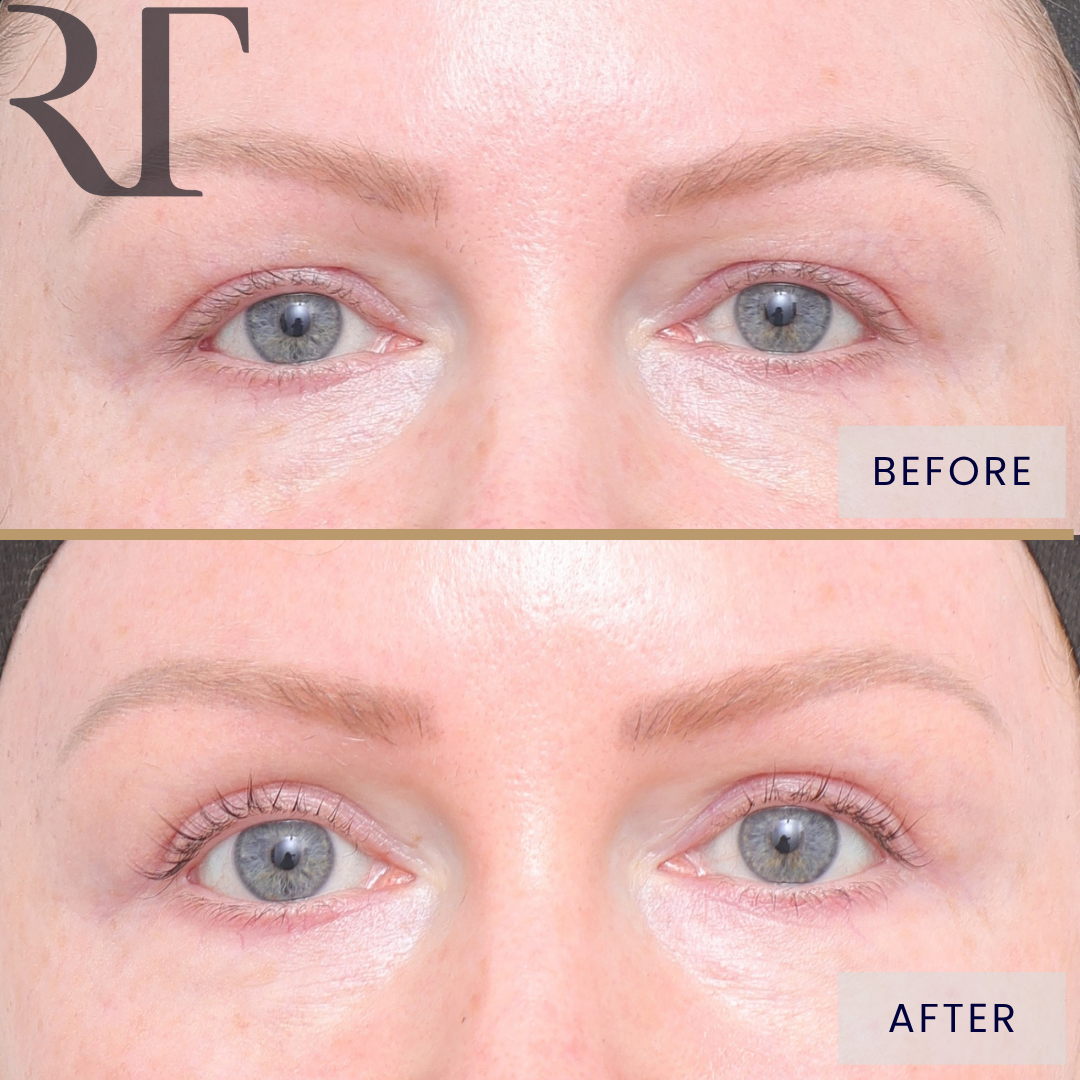
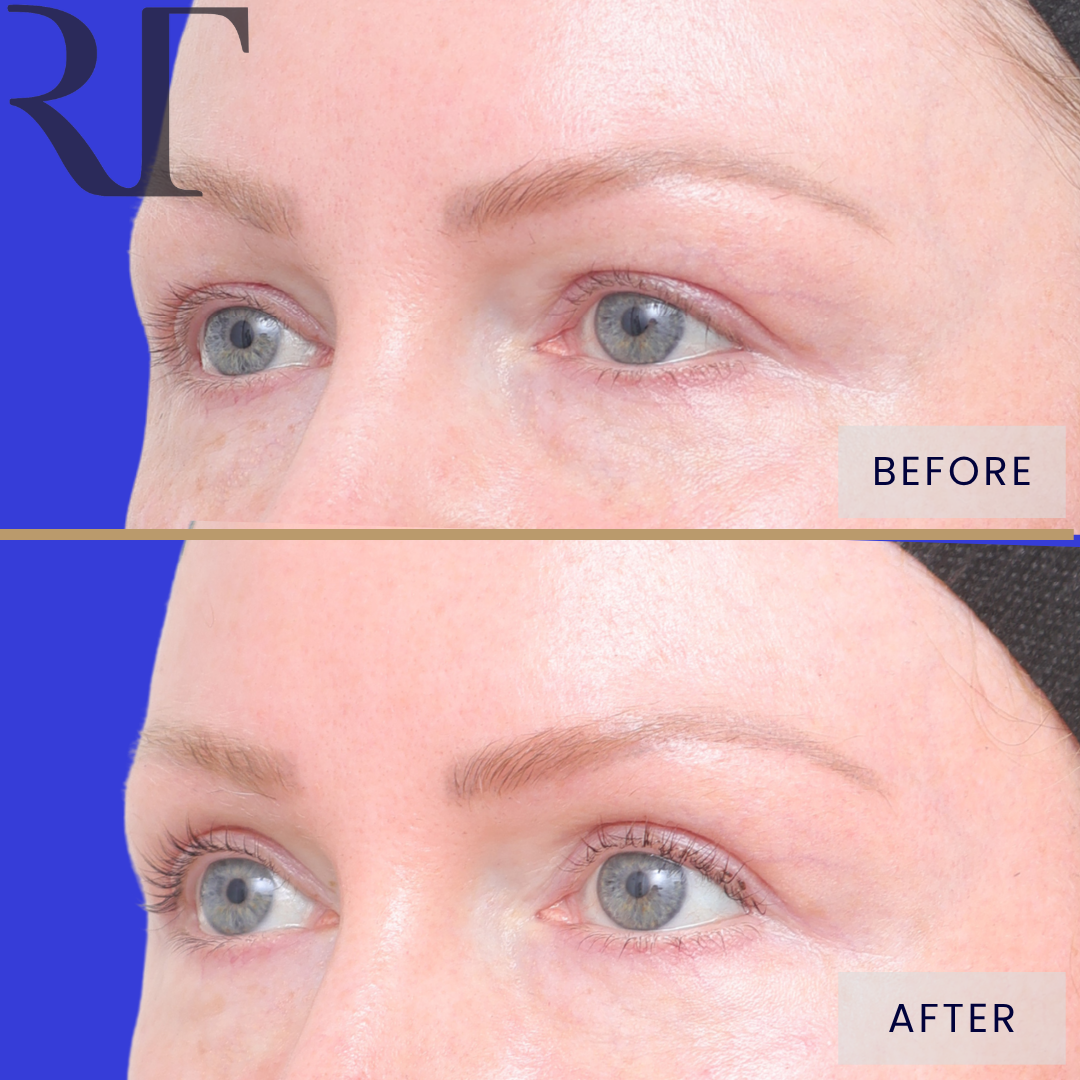
Images shown with each patient’s consent. Each case shows one individual and is not a guarantee of outcome; results vary between people and depend on anatomy and healing. Any surgical or invasive procedure carries risks. Before proceeding, you should seek a second opinion from an appropriately qualified health practitioner.
Informed consent
Upper Blepharoplasty Risks and Complications
Upper eyelid surgery carries potential risks, and it is important to understand possible effects and complications before deciding to proceed.
Common or temporary effects may include:
- Swelling or bruising around the eyes
- Mild bleeding or oozing
- Blurred vision or light sensitivity (temporary)
- Minor asymmetries or irregularities during healing
- Dry eyes or mild irritation
Less common complications may include delayed wound healing, visible scarring, infection, uneven crease formation, incomplete eyelid closure during early healing, or the need for revision surgery.
Rare complications can include bleeding, eyelid malposition, injury to deeper eye structures, or changes in vision. All potential risks are discussed during consultation to support informed decision-making.
Upper Blepharoplasty: What to Expect From Initial Consultation to Recovery
Step 1
Initial Consultation
The process begins with a comprehensive consultation, during which Dr Teixeira assesses the upper eyelids, brow position, eyelid crease anatomy, and eyelid support, alongside overall health and medical history. This supports a plan aligned with individual anatomy and priorities. Patients are encouraged to ask questions and discuss options, limitations, and what may be realistic to achieve through surgery.
For patients seeking cosmetic surgery, two consultations and a minimum 7-day cooling-off period apply before proceeding, in line with Medical Board of Australia requirements.
Step 2
Day of Surgery
On the day of the procedure, the clinical team explains each step and confirms the surgical plan. Upper blepharoplasty can be done as day surgery under local anaesthetic with sedation, with an anaesthetist present. A general anaesthetic is used when it is combined with other surgery, such as a brow lift, facelift or fat transfer. It can also be done in the rooms under local anaesthetic only. Surgery commonly takes one to one and a half hours, followed by a short monitoring period before going home with a companion.
As the anaesthetic wears off, tightness, mild stinging, or tearing may occur and often improves with cold compresses and lubricating drops. Written aftercare instructions are provided, including guidance on head elevation, avoiding rubbing the eyes, and arranging support for the journey home.
Step 3
Recovery and Aftercare
Swelling, bruising, and a feeling of tightness or heaviness around the upper eyelids are common during the first week and gradually improve as healing progresses. Cold compresses, eye lubricants, and sleeping with the head elevated may help comfort and swelling in early recovery.
Stitches are typically removed within five to seven days, and many patients return to light daily activities or office work within seven to ten days, depending on healing and work demands. The eyelids may feel slightly dry or sensitive for several days. As swelling settles, the appearance of the upper lids may continue to refine, and tissues will continue to change over time. Follow-up appointments support monitoring and tailored aftercare guidance throughout recovery.
Recovery timelines vary and are discussed based on the planned technique and individual healing factors.
Combining procedures
Combining upper blepharoplasty with other procedures
Upper eyelid changes rarely occur in isolation, so the eyelids are assessed together with the brow, the lower lids and the rest of the face. Common combinations include:
- Brow lift – when a low or heavy brow contributes to the hooding, restoring brow position means only a conservative amount of eyelid skin needs to be removed.
- Lower blepharoplasty – upper and lower eyelids are frequently treated in the same operation to address bags, hollowing and skin laxity below the eye at the same time.
- Facial fat transfer – where the upper eyelid or brow has hollowed, small volumes of the patient’s own fat can be added to soften a deep sulcus and support the brow.
- Facelift or neck lift – for people addressing the whole face, eyelid surgery is often performed during the same anaesthetic.
Combined procedures are performed under general anaesthetic in hospital and usually involve a longer recovery than upper blepharoplasty alone.
Case example: hairline brow lift with upper blepharoplasty and ptosis correction
This patient presented with excess upper-eyelid skin affecting her visual field, together with a sensation of heaviness and concerns about a tired appearance. Treatment involved a subcutaneous hairline brow lift with revision of the pre-existing scars, combined with upper blepharoplasty and correction of eyelid ptosis due to reduced function of the eyelid-lifting muscle. Surgery was performed in hospital under general anaesthesia as a day procedure. The postoperative photographs were taken three months after surgery, while healing was still progressing. Further settling, including a small degree of brow descent, may occur over time.
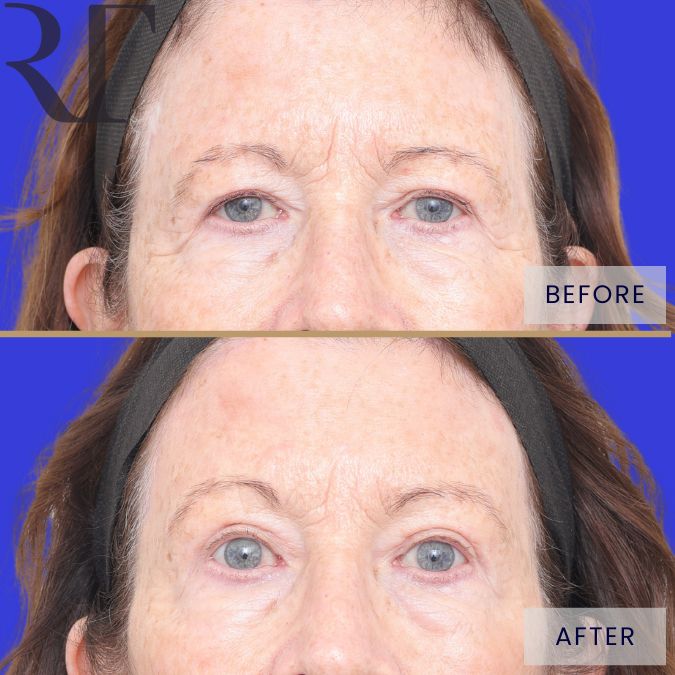
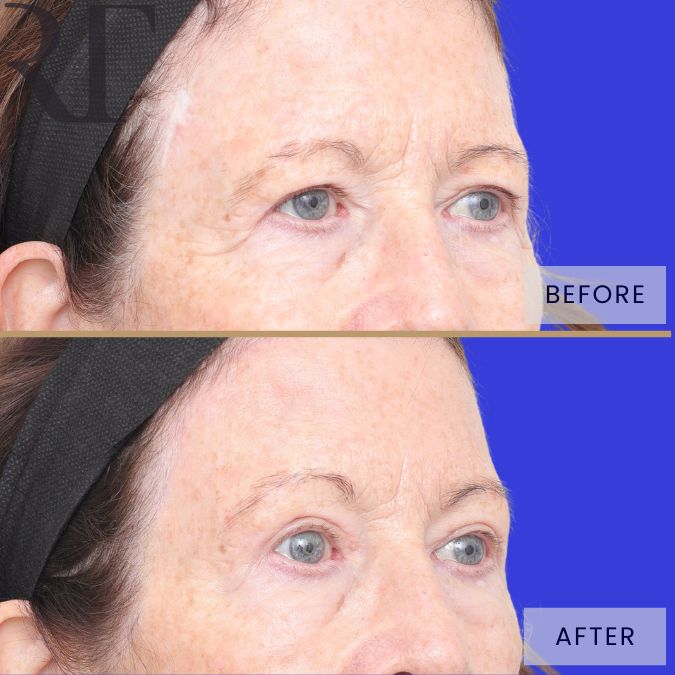
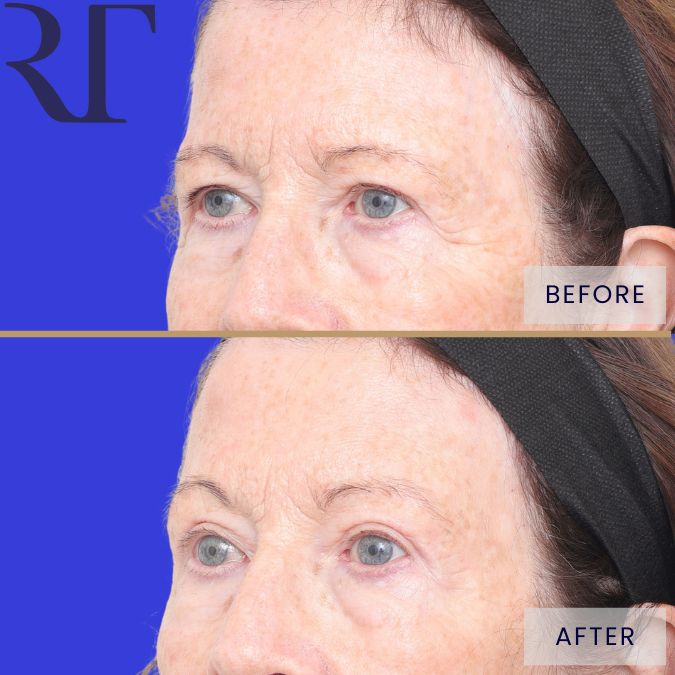
Images shown with the patient’s consent. Photographs are of one individual and are not a guarantee of outcome; results vary between people and depend on anatomy and healing. Any surgical or invasive procedure carries risks. Before proceeding, you should seek a second opinion from an appropriately qualified health practitioner.
Questions
FAQs
An incision is placed in the natural upper eyelid crease so that the resulting scar sits in the fold when the eye is open. Through this incision a measured strip of excess skin is removed, sometimes with a narrow strip of orbicularis muscle. Fat is preserved, repositioned or conservatively reduced depending on the anatomy, and the crease may be anchored to deeper tissue for a stable, natural fold. Fine sutures close the wound.
The aim of upper blepharoplasty is to remove surplus skin and restore a defined crease, not to alter the shape or expression of the eyes. Conservative skin removal and careful crease placement help keep the result consistent with your own features. Where a change in eye shape is the goal, or where the outer corner of the eye needs support, different procedures are discussed rather than blepharoplasty alone.
No. Crow’s feet are lines at the outer corner of the eye caused by the orbicularis muscle contracting when you smile or squint, and they lie outside the area treated by upper blepharoplasty. They may be softened with anti-wrinkle injections, skin resurfacing or, in some cases, fat transfer to the temple and outer eye region, which can be discussed alongside eyelid surgery if relevant.
When excess upper eyelid skin rests on the lashes and narrows the upper field of vision, removing that skin can relieve the heaviness and restore the obstructed field. Documented visual field testing and photographs are needed to confirm this. If the criteria are met, a Medicare item number may apply and private health insurance may contribute towards hospital costs; otherwise the surgery is treated as cosmetic.
Swelling and bruising are most noticeable in the first three to four days and largely settle within one to two weeks. Sutures are removed at five to seven days. Most people return to office work within seven to ten days, often wearing glasses to cover residual bruising. The scar is pink for a few months before fading into the crease, and the final contour settles over three to six months.
Eye makeup can usually be resumed about two weeks after surgery, once the incisions have fully closed and sutures are out. Gentle walking is encouraged from the first day. Activities that raise blood pressure, such as running, weights or hot yoga, are best avoided for two to three weeks to limit swelling and bleeding risk. Swimming waits until the wounds are sealed, typically around three weeks.
The skin removed does not return, so the improvement is long-lasting. The eyelids and brow continue to age, however, and skin laxity gradually recurs over ten to fifteen years in many people, sometimes sooner with sun exposure or smoking. A small number of patients choose a secondary procedure later. Maintaining brow support and skin quality helps prolong the result, though individual outcomes vary.
Fees include the surgeon’s fee, the anaesthetist’s fee and the hospital or day-surgery fee, which vary with the type of anaesthetic and whether other procedures are combined. A written quote is provided after consultation. Some cases may be eligible for a Medicare rebate when specific clinical criteria are met, and patients may be able to use their private health insurance. Out-of-pocket fees still apply. For upper blepharoplasty, one example of these criteria is a documented visual field obstruction (MBS item 45617). Surgery for cosmetic reasons alone is self-funded.
Yes, a secondary upper blepharoplasty can be considered when skin laxity has recurred years later or when an earlier procedure left asymmetry or an unsatisfactory crease. The amount of remaining skin is the limiting factor, because enough must be kept for comfortable eye closure. Revision cases are assessed carefully, and in some the better option is brow lift or fat transfer rather than further skin removal.
Upper blepharoplasty can be done as day surgery under local anaesthetic with intravenous sedation, with an anaesthetist present. A general anaesthetic is used when the eyelids are treated together with a brow lift, facelift or fat transfer. It can also be done in the rooms under local anaesthetic only. The choice is made together at consultation.
It depends on where the hooding comes from. If the brow sits low and is contributing to the fold, removing eyelid skin alone can draw the brow down further and flatten the eye. In that situation a brow lift, alone or combined with a conservative blepharoplasty, gives a more balanced result. Brow position is assessed at rest and with the forehead relaxed during consultation.
There is no fixed age. Most people considering upper blepharoplasty are in their forties to sixties, when skin excess has developed, but younger adults with inherited heavy lids or hooding, and older adults in good health, may also be suitable. Suitability depends on the anatomy, eye health and general health rather than age, and each case is assessed individually.
Journal
Upper Eyelid Surgery Blog
Exploring Upper Eyelid Surgery: Common Concerns, Timing, Expectations and Recovery
Lower Eyelid Surgery: Under‑Eye Bags & Tear Trough Treatment Guide