Facial Surgery
Facial Fat Transfer Melbourne
Facial fat transfer, also known as facial fat grafting, is a surgical technique that uses a person’s own fat to restore volume and soften age-related contour changes. As a treatment option for facial fat grafting in Melbourne, it may help address areas of hollowing, soften transitions between facial regions, and support overall facial balance. A consultation allows your surgeon to assess suitability and discuss treatment options based on your goals, anatomy, and medical history.
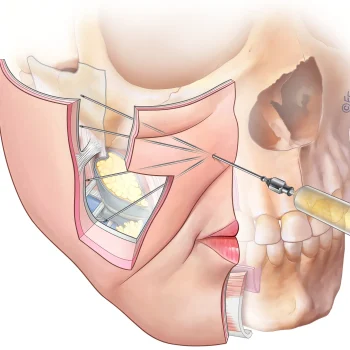
Facial fat transfer zones, selected according to individual anatomy and volume loss.
Illustration: Levent Efe, CMI
What Is Facial Fat Transfer?
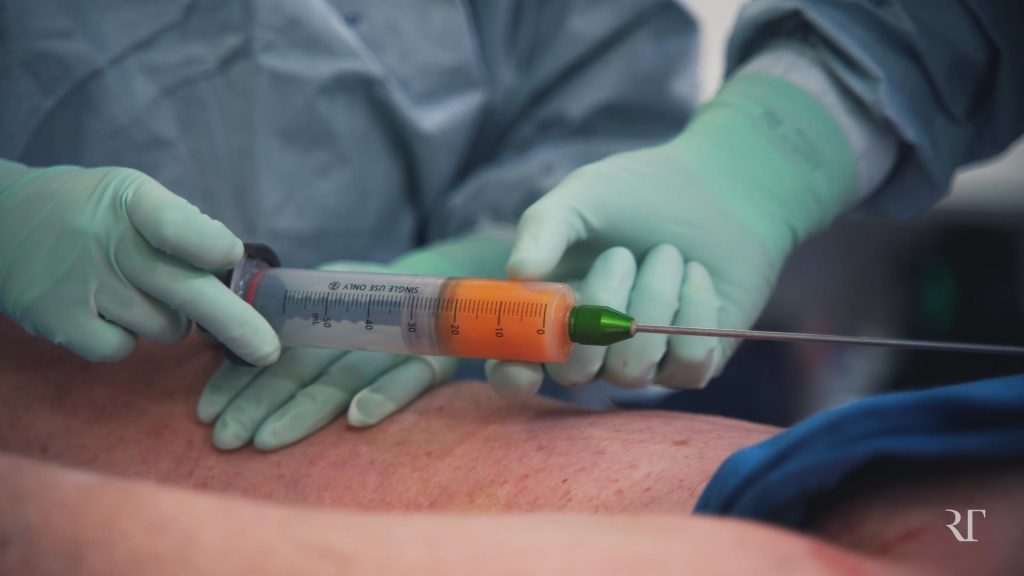
Facial fat transfer involves collecting a small amount of fat from another area of the body, refining it, and injecting it into selected areas of the face. The procedure typically begins with fat harvesting from areas such as the abdomen, thighs, or flanks. The collected fat is then purified to remove excess fluid, oils, and damaged cells, leaving a refined graft suitable for reinjection.
Because the tissue comes from your own body, the risk of rejection is low. Face fat grafting is sometimes chosen by people who prefer an autologous (self-derived) option rather than synthetic volumisation, or implants. It is a surgical procedure, and all surgery carries risks. This approach to fat transfer to the face is tailored to individual anatomy and goals, noting that outcomes vary between people.
Concerns Addressed by Facial Fat Grafting
Facial fat grafting may be used to address age- or structure-related volume changes in both the deep and superficial facial fat compartments. These changes often occur across multiple regions (a “pan-facial” process). Common areas include:
- Under-eye hollowness, tear trough and shadows around the eyes
- Midface flattening and reduced cheek projection
- Nasolabial folds and marionette lines
- Temporal and pre-auricular hollowing
- Early contour changes along the jawline
Fat grafting is a volume-restoration technique. It restores soft-tissue volume but does not replicate the structural effect of bone or implants. Suitability depends on whether volume loss rather than skeletal support, contributes to your concerns.
Some transferred fat may integrate once a blood supply develops, but the amount that remains varies between individuals.
How facial fat grafting compares with temporary volumising options
Non-surgical volumising treatments use temporary products that gradually reduce over time as they are absorbed by the body. Fat grafting uses your own transferred fat, which behaves differently because it is living tissue. Fat may provide longer-lasting volume in areas where it survives, while temporary options gradually diminish. Each approach has benefits and limitations depending on anatomy, goals, and treatment preferences.
Suitability
Who is facial fat transfer suitable for?
Facial fat transfer is generally considered for people whose concerns relate to loss of soft-tissue volume: hollowing of the temples or under the eyes, flattening of the midface, or early contour changes along the jawline. It may suit those who prefer to use their own tissue rather than a synthetic product, and those who would like a longer-lasting approach than temporary volumising treatments.
It is less likely to be recommended when the main concern is skin laxity or tissue descent, which are usually better addressed by a facelift, or where the underlying issue is skeletal support rather than volume. Very low body fat can limit the amount of tissue available for harvest. Smoking, certain medical conditions and some medications affect healing and fat survival and are discussed at consultation. Realistic expectations matter: fat survival varies between people, and a second, smaller session is sometimes planned rather than over-correcting in one procedure.
The Facial Fat Transfer Procedure
Facial fat transfer involves three main steps:
1. Fat Harvesting
Fat is gently collected from areas such as the abdomen or thighs. Research suggests that donor site choice does not appear to significantly affect fat cell viability, so the decision is usually based on patient preference and available tissue. Local anaesthetic solutions are used to support comfort and assist with the harvesting process.
2. Processing and Refinement
The harvested fat is processed to remove excess fluid, oils, and damaged cells, leaving a concentrated graft. Techniques vary, but generally involve separation and refinement to prepare different fat consistencies, structural fat, microfat, and nanofat. This step helps create a graft suitable for the intended facial layers.
3. Placement
Fat is injected using fine cannulas in small droplets across multiple passes and layers. This technique supports even distribution and encourages graft contact with healthy tissue. Different areas may require placement of fat at different depths, from deep subcutaneous or pre-periosteal layers to superficial layers for fine-line treatment. A staged approach may be discussed for individuals with widespread or advanced volume loss.
As with any surgical procedure, outcomes depend on individual anatomy, healing, and fat survival.
Your journey
The day of surgery
Facial fat transfer is performed under general anaesthetic in hospital as a day procedure, so most people go home the same day with a responsible adult. When it is combined with another operation that requires an overnight stay, such as a facelift, admission is arranged accordingly.
As a standalone procedure it usually takes one to two hours, depending on the number of areas treated. The donor site is infiltrated with local anaesthetic solution before harvesting, which assists comfort in the first hours after surgery. Hilotherm cooling, a controlled cool-water face mask, can be used during recovery to help with comfort, swelling and bruising. Arrangements for anaesthesia, hospital and post-operative review are confirmed in writing before the day.
Our approach
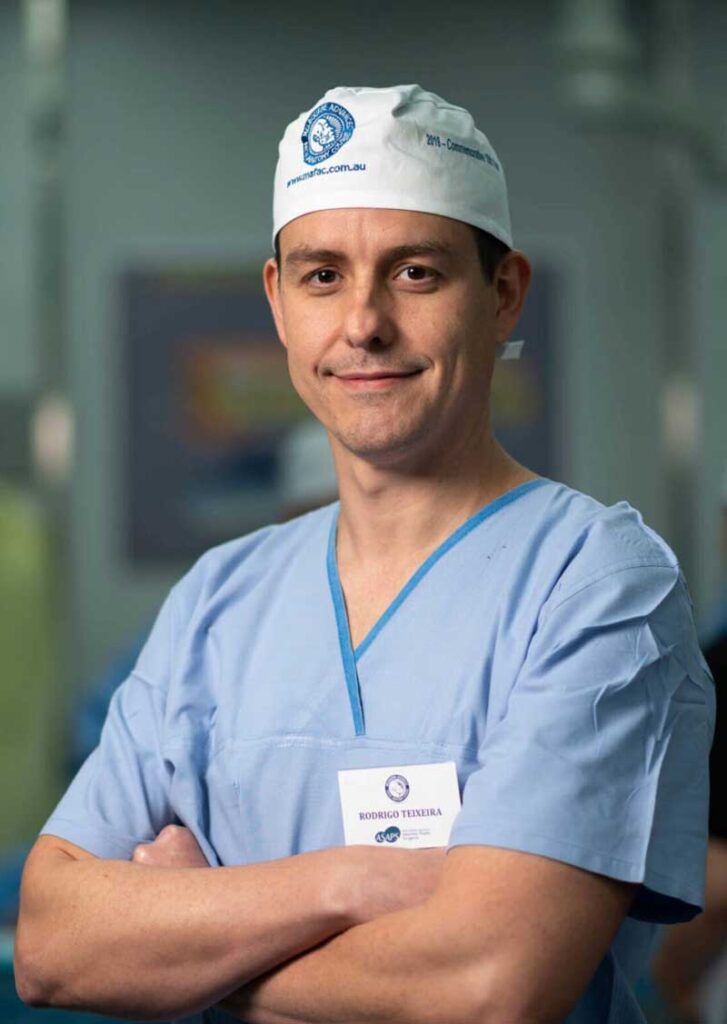
Dr Rodrigo Teixeira’s Approach to Facial Fat Transfer
Dr Teixeira plans facial fat transfer using an anatomical assessment of both deep and superficial fat compartments to identify where true volume loss is contributing to facial changes. He prefers closed fat-handling systems to help limit exposure to air and reduce the risk of contamination or oxidation. The harvested fat is then processed using adipose micronising devices (adnizers) to prepare structural fat, microfat, and nanofat for different treatment layers.
He applies a layered technique, placing structural fat in deeper planes for support, microfat to refine contour transitions, and nanofat in superficial layers to address fine lines and skin texture. This approach aims to match the fat consistency to the goals of each area, while respecting natural anatomical boundaries. Individual healing characteristics influence the degree of fat survival and overall outcome.
Combining procedures
Combining fat transfer with facelift or eyelid surgery
Ageing rarely involves volume loss alone. Where tissue descent is also present, fat transfer is often planned alongside a facelift or deep plane facelift: the lift repositions descended tissue, and fat restores volume where lifting alone does not. Around the eyes, fat grafting to the tear trough and upper cheek can be combined with lower blepharoplasty or upper blepharoplasty. Whether a combined approach is appropriate depends on anatomy, goals and general health, and is discussed at consultation.
For more on how fat transfer and facelift surgery work together, see the article Facelift Surgery with Fat Transfer: Addressing Facial Volume Loss.
Case example: lower blepharoplasty with fat grafting
A man in his forties presented with under-eye bags, a deepening tear trough and flattening of the upper cheek, giving a tired appearance that did not match how he felt. Assessment showed both prominent lower eyelid fat and volume loss at the lid–cheek junction, so neither eyelid surgery nor fat grafting alone would have addressed the whole picture.
Treatment was a lower blepharoplasty with conservative removal and repositioning of the eyelid fat, combined with microfat grafting to the tear trough and upper cheek in the same operation, under general anaesthetic as a day procedure. The photographs show the frontal, oblique and profile views before surgery (top) and at follow-up (bottom): a smoother transition from eyelid to cheek and a more rested appearance, with the eyes themselves unchanged.
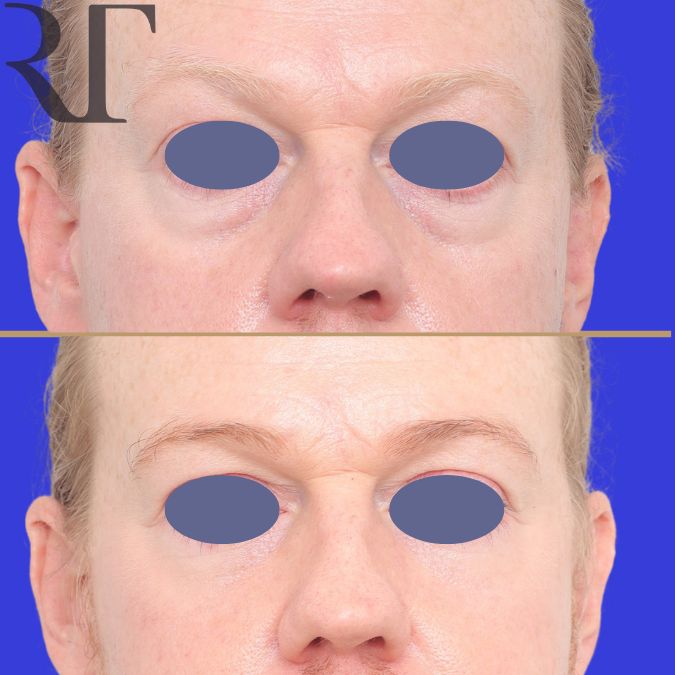
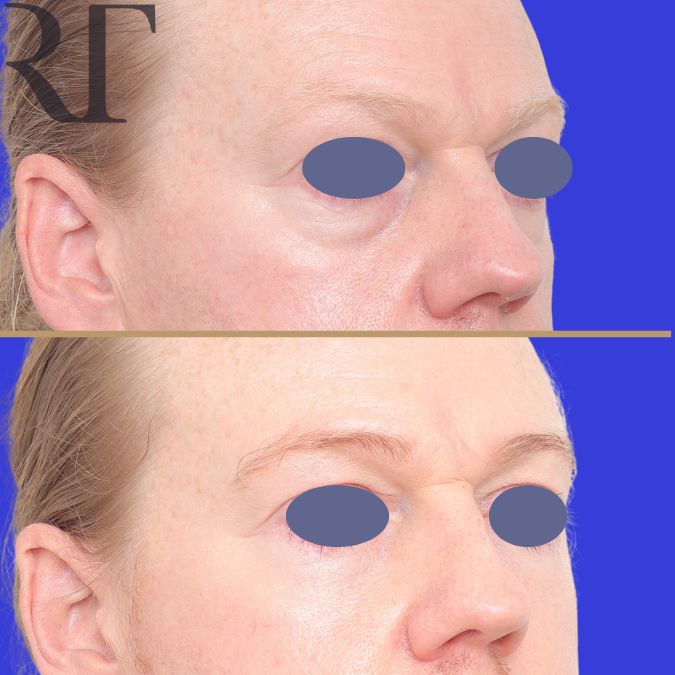
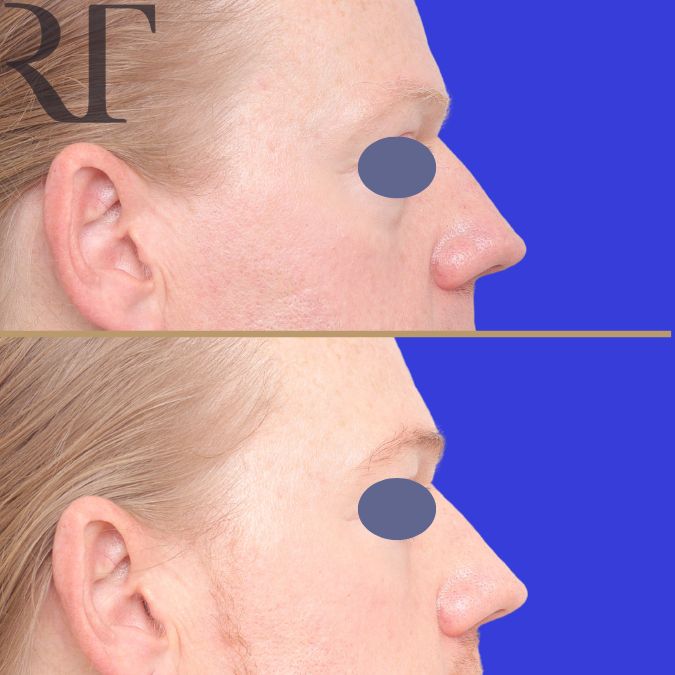
Images shown with the patient’s consent. Photographs are of one individual and are not a guarantee of outcome; results vary between people and depend on anatomy, healing and fat survival. Any surgical or invasive procedure carries risks. Before proceeding, you should seek a second opinion from an appropriately qualified health practitioner.
Informed consent
Risks & Safety Considerations of Facial Fat Grafting
All surgical procedures involve risks. Common temporary effects include swelling, bruising, and mild numbness in both donor and recipient sites. These usually settle over days to weeks.
Less common risks may include:
- asymmetry
- over- or under-correction
- fat necrosis or small lumps
infection - contour irregularities
- changes in fat survival
Vascular safety is an important part of the procedure. Techniques such as using blunt cannulas, slow injections, and careful anatomical planning support safe practice. Individual results vary.
Aftercare
Recovery & Aftercare
Recovery varies, but many people experience the following pattern:
First few days
Swelling, bruising, and tenderness are expected. Keeping the head elevated and using cold compresses (as advised) may assist comfort.
Weeks following treatment
Bruising typically fades over one to two weeks. Swelling usually reduces over two to three weeks, with some areas taking longer to settle. Light activities can resume as advised by your surgeon.
General recommendations
- Sleep with your head elevated
- Avoid smoking
- Avoid pressure or massage to treated areas
- Delay strenuous exercise until cleared
- Avoid saunas and steam rooms
- Attend scheduled follow-up appointments
Follow-up appointments allow your surgeon to monitor healing and discuss any required adjustments.
Our Melbourne Clinic
Our clinic, located in Ivanhoe East, provides a professional and supportive environment. Patients have access to comfortable consultation and treatment areas, as well as a team of attentive staff who assist throughout the pre- and post-treatment phases.
Your journey
What to Expect at Your Consultation
A consultation offers the chance to discuss your goals and understand whether facial fat transfer is appropriate for your concerns. During the appointment, your surgeon will:
- Review your medical history
- Perform a detailed facial assessment and photographic analysis
- Discuss areas of volume loss and potential treatment strategies
- Outline risks, benefits, and what the procedure involves
- Provide a cost estimate and treatment plan
- Review informed-consent requirements and pre-operative considerations
Questions
Facial fat transfer: common questions
Fat that survives the first few months after transfer has established its own blood supply and generally behaves like the surrounding tissue, so it is expected to persist for years rather than months. The proportion that survives varies between people and between areas of the face, and the face continues to age around it. Significant weight change can alter the result, because transferred fat responds to weight gain and loss like fat elsewhere.
The total cost has several components: the surgeon’s fee, the anaesthetist’s fee and the hospital or day-surgery fee, together with any follow-up. It depends on how many areas are treated and whether fat transfer is performed alone or combined with another procedure. Facial fat transfer for cosmetic reasons does not attract a Medicare rebate or private health fund cover. A written, itemised quote is provided after consultation.
Partly. Some of the transferred fat is reabsorbed in the first weeks and months; the remainder integrates and is long-lasting. Because survival cannot be predicted exactly for an individual, the aim is a natural correction rather than over-filling, and a smaller second session is sometimes planned. The result is also influenced by ongoing ageing and by changes in body weight.
All surgery carries risk, and facial fat grafting is no exception. Common temporary effects include swelling, bruising and numbness. Less common risks include asymmetry, lumps or firmness, over- or under-correction, infection and, rarely, injury to blood vessels. Risk is reduced by careful anatomical planning, blunt cannulas, low-pressure injection in small quantities, and performing the procedure in an accredited hospital under specialist anaesthetic care.
Facial fat grafting, or facial fat transfer, is a surgical procedure that uses a small amount of your own fat to restore volume to the face. Fat is harvested from the abdomen or thighs, refined to remove fluid and damaged cells, and placed in fine layers where volume has been lost. Because the tissue is your own, there is no risk of allergy or rejection.
Discomfort is usually mild and settles within the first week. The donor site tends to feel bruised and tender for several days, similar to the effect of minor liposuction. The face is generally more swollen than sore. Local anaesthetic at the donor site, simple pain relief and cooling of the face in the early recovery period help with comfort.
They suit different situations. Temporary fillers are quick, adjustable and require no anaesthetic, but they are gradually absorbed and need repeating. Fat transfer is a surgical procedure that uses your own living tissue and can provide longer-lasting volume, often across several areas in one session, and is frequently combined with other facial surgery. For a person with mild, localised volume loss a filler may be the more proportionate option; for broader or more advanced volume loss, or where surgery is already planned, fat transfer is often preferred.
Most of the swelling resolves over two to three weeks, and many people feel comfortable in social situations within about two weeks. The final contour continues to refine for three to six months as swelling fully clears and the surviving fat settles, so the result is best judged around the six-month mark.
You may be a suitable candidate if your concern is loss of volume rather than skin laxity, you are in good general health, you have enough donor fat available, and your expectations are realistic about variable fat survival. It is less suitable where tissue descent or skeletal support is the main issue, or in people who smoke. Suitability is assessed at consultation.
Yes. Facial fat transfer is performed under general anaesthetic in hospital as a day-surgery procedure, so most people return home the same day. When it is combined with another operation that requires an overnight stay, admission is arranged accordingly. As a standalone procedure it takes one to two hours depending on the areas treated.
Most people take one to two weeks away from work and social commitments while bruising and the bulk of the swelling settle. Desk-based work is often possible after about a week if you are comfortable with some visible swelling. Strenuous exercise is usually delayed for two to three weeks, and any timing is confirmed with you at your post-operative review.
Journal
Facial Surgery Blog
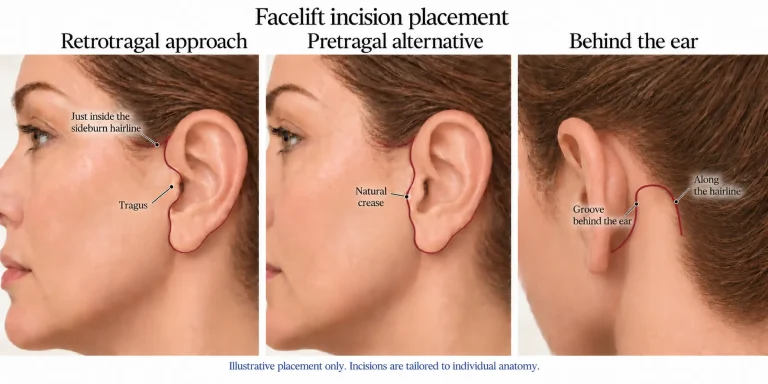
Facelift Incisions and Scars Around the Ears

Demystifying the Deep Plane Facelift