Facial Surgery
Neck Lift (Platysmaplasty) in Melbourne
Dr Rodrigo Teixeira FRACS, Specialist Plastic Surgeon
Neck lift surgery addresses loose skin, visible muscle bands and fullness beneath the chin to improve definition between the jawline and neck. The surgical approach is tailored to each person’s anatomy and goals, with the extent of improvement varying between individuals.
Neck Lift Surgery
A neck lift treats the skin and underlying tissues that shape the neck. It can involve removing excess skin, known as cervicoplasty; reshaping or repositioning the platysma muscle, known as platysmaplasty; and contouring fat deposits.
The term “neck lift” covers several approaches. On this page, Deep Plane Face and Neck Lift describes lifting the lower face and neck through incisions around the ears. Submental Neck Lift describes direct treatment of central muscle bands and superficial fat through an incision beneath the chin. Deep Neck Contouring describes additional treatment of structures beneath the platysma.
These approaches can be combined according to the treatment plan. An under-chin incision is not required for every face and neck lift, and using one does not necessarily mean that deeper neck structures will be treated.
Dr Teixeira’s approach considers the relationship between the neck, chin and jawline. Surgical planning brings together your priorities, the changes that are realistically achievable and the risks associated with each option.
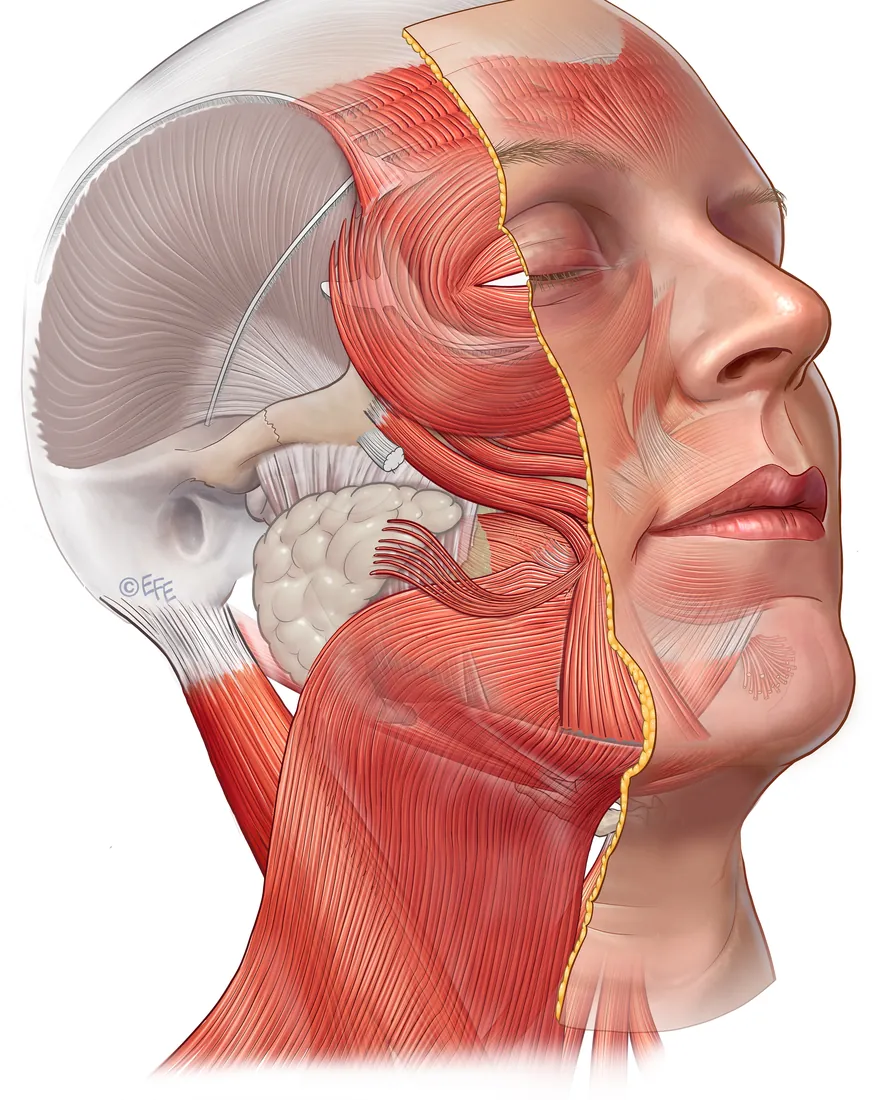
The platysma, the thin sheet of muscle treated in a neck lift, extends from the neck over the jawline. Illustration: Levent Efe, CMI
Assessing the Neck and Jawline
The appropriate treatment depends on which structures contribute to your concerns. Assessment examines the neck at rest and during movement, considering skin quality, fat distribution and the position and activity of the platysma muscle.
The platysma is a thin sheet of muscle extending across the neck into the lower face. Its edges and activity can contribute to visible vertical bands, while changes in its support can reduce definition. Fullness can arise from superficial fat above the muscle or deeper structures beneath it, including the deep fat pad, digastric muscles and submandibular salivary glands.
Chin projection, the shape of the lower jaw and the position of the hyoid bone also influence the neck profile. These features help explain why removing fat or tightening skin alone may not achieve the change someone has in mind. Assessment identifies which structures would benefit from treatment and which anatomical features limit the achievable contour.
Suitability
Who is a neck lift suitable for?
A neck lift is generally considered for adults whose main concerns are loose neck skin, vertical muscle bands, fullness beneath the chin or loss of definition between the jawline and neck. Assessment covers skin quality and elasticity, the pattern of banding, where fullness sits relative to the platysma, chin and jaw structure, general health, smoking and nicotine use, and expectations. Each of these shapes whether lateral lifting, central treatment, deeper contouring or a combination is discussed.
A neck lift is less likely to be the right choice when the main concern is fine crepiness or horizontal lines rather than laxity, when weight is expected to change significantly, or when health factors make the risks unacceptable. In those situations skin-quality treatments, a period of weight stability or a different plan may be discussed at consultation.
Techniques
Choosing the Surgical Approach
Neck surgery can involve lifting descended tissues, treating the central neck beneath the chin, or combining both. The pattern of skin laxity, muscle banding and fullness guides the approach.
Deep Plane Face and Neck Lift
A Deep Plane Face and Neck Lift uses an extended deep plane facelift approach to lift the lower face and neck through incisions around the ears. The deeper facial tissues and connected platysma are released and repositioned, providing lateral neck support. Excess skin is then redraped and trimmed, with closure planned to minimise tension.
This approach can address jowls and tissue laxity without an under-chin incision when the central neck does not require direct treatment. Where central banding or fullness needs additional attention, a Submental Neck Lift or Deep Neck Contouring can be incorporated.
Further information is available on the facelift page and the deep plane facelift page, and Deep Plane Facelift vs Other Facelift Techniques explains how the approaches differ.
Submental Neck Lift
A Submental Neck Lift treats the central neck through an incision beneath the chin. Superficial fat is contoured using liposuction or direct removal, and central platysma bands are addressed with a corset platysmaplasty where appropriate. Muscle support helps improve contour without relying on skin tension alone.
It can be performed alone when concerns are confined to the central neck and skin elasticity is adequate, or combined with a Deep Plane Face and Neck Lift. Fat removal alone can leave loose skin more apparent, and an under-chin approach does not remove substantial skin excess.
Deep Neck Contouring
Deep Neck Contouring treats fullness arising beneath the platysma, including the deep fat pad, digastric muscles or submandibular salivary glands. These structures are accessed through the under-chin incision and treated according to their contribution to the contour; not all require treatment.
It can accompany central platysma repair as an isolated neck procedure or form part of a combined Deep Plane Face and Neck Lift. Careful tissue preservation is important, as excessive removal can create depressions, tethering or irregularities.
Deeper treatment adds complexity and specific risks. Its extent is guided by the expected benefit, individual anatomy and preservation of function.
Scars
Incisions and Scars
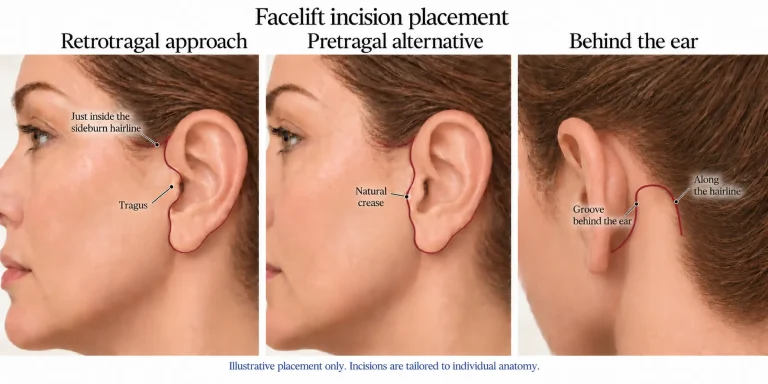
A Submental Neck Lift and Deep Neck Contouring use an incision beneath the chin. A Deep Plane Face and Neck Lift uses incisions around and behind the ears, sometimes extending into the adjacent hairline. These additional incisions may also be needed during isolated neck surgery when excess skin requires removal.
All incisions leave permanent scars. They generally soften and fade over time, but some remain widened, raised or different in colour. Skin characteristics, wound tension, smoking and healing complications influence their appearance. Incision placement and scar care are discussed during consultation and follow-up.
For more about incisions around the ears, closure techniques and healing, read Facelift Incisions and Scars Around the Ears.
Before and After Photographs
The following groups illustrate different combinations of face and neck surgery. Each approach is selected for the patient’s anatomy and concerns.
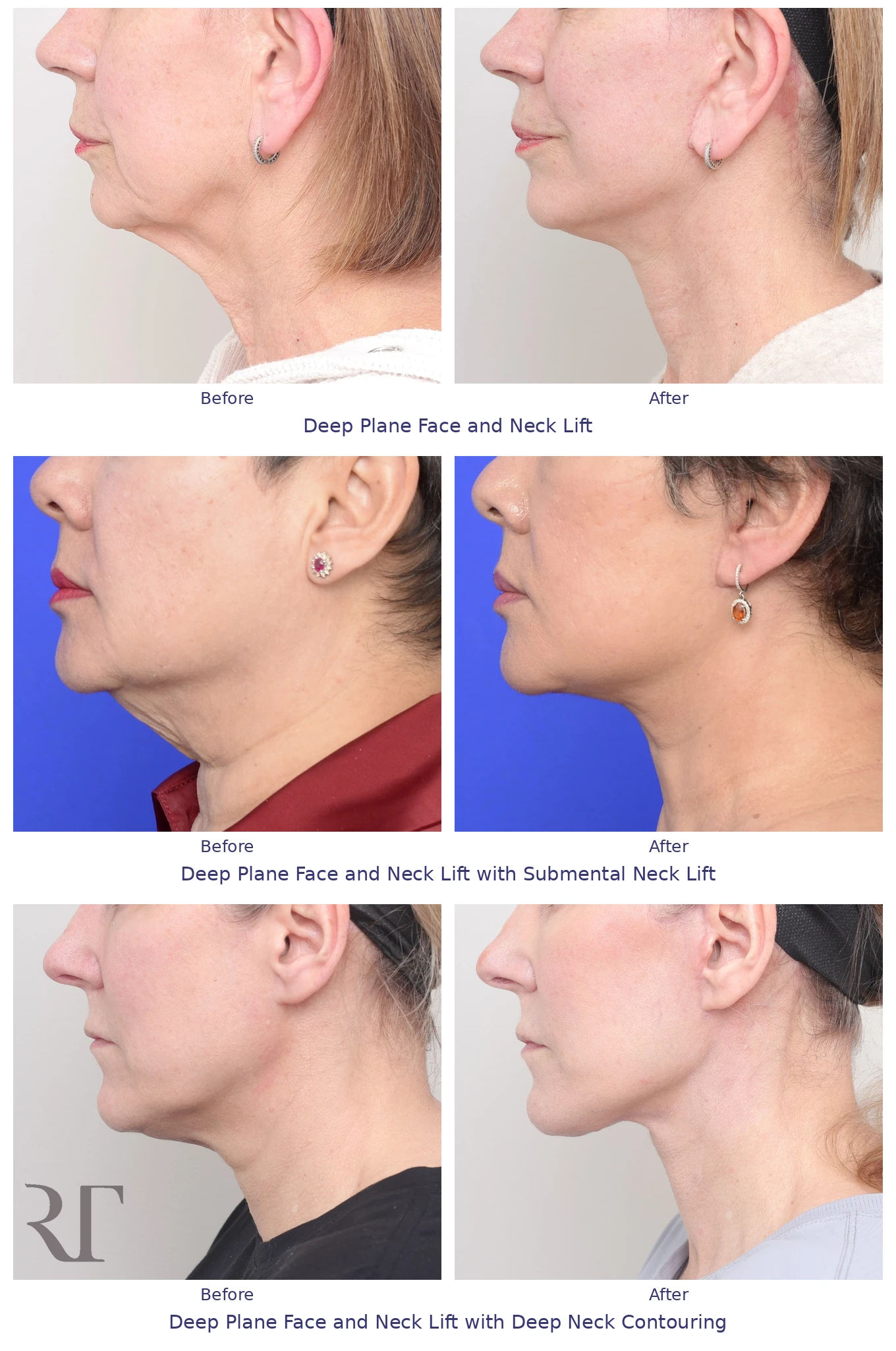
- Deep Plane Face and Neck Lift — lateral lifting of the lower face and neck without an under-chin incision.
- Deep Plane Face and Neck Lift with Submental Neck Lift — lateral lifting with additional treatment of central platysma bands and fat pockets beneath the chin.
- Deep Plane Face and Neck Lift with Deep Neck Contouring — lateral lifting with additional contouring of deeper neck structures through an under-chin approach, which may include partial removal of the submandibular glands.
Photographs should be considered alongside the procedures performed and the time since surgery. Differences in starting anatomy, healing and additional treatments affect each result. Another patient’s outcome does not predict your own, and comparisons between different patients do not establish that one approach is more effective. More face and neck cases are shown in the before and after gallery.
Images shown with the patients’ consent. Any surgical or invasive procedure carries risks. Before proceeding, you should seek a second opinion from an appropriately qualified health practitioner.
Your journey
Expected Improvements and Limitations
Surgery can improve the transition between the chin and neck, reduce loose skin and soften muscle bands. A Deep Plane Face and Neck Lift also addresses lower-face descent and jowls, while a Submental Neck Lift and Deep Neck Contouring treat central neck concerns.
The degree of improvement depends on the tissues treated, skin quality and underlying structural support. Surgery cannot guarantee a particular jawline or perfect symmetry. Some fullness or banding can remain. Fine crepiness, horizontal neck lines and sun-related skin changes can also persist, even when the deeper contour improves.
The result develops gradually as swelling settles and scars mature. Ageing continues, and weight changes can affect the contour over time. Muscle bands or laxity can recur, and there is no guaranteed duration of benefit. Further treatment is occasionally considered for residual or recurrent concerns, with additional risks and costs.
Your journey
Consultation and Preparation
Your consultation provides time to discuss what concerns you, the changes you would feel comfortable with and any questions about treatment. Dr Teixeira will review your medical history, examine your face and neck, and discuss suitable options, including the option of no treatment. Clinical photographs assist planning and follow-up.
The proposed plan will specify whether it involves a Deep Plane Face and Neck Lift, a Submental Neck Lift, Deep Neck Contouring or a combination. Where deeper treatment is proposed, the structures to be addressed and their specific risks will be explained.
Previous surgery, liposuction, threads, injectables and energy-based treatments should be disclosed, as they can affect tissue planes and surgical planning. Previous operation reports can be helpful. Medicines, supplements, smoking and nicotine use are also reviewed; prescribed medicines should not be stopped without advice from the treating clinician.
Suitability involves physical health, psychological wellbeing and realistic expectations. Surgery can be deferred or not recommended if the risks are unacceptable or the proposed treatment is unlikely to meet your goals.
For cosmetic surgery, a referral and at least two preoperative consultations are required, including an in-person consultation with the operating surgeon. A minimum seven-day cooling-off period applies after informed consent before surgery can be booked or a deposit paid. Further details are available on the consultation process page.
Your journey
Day of Surgery
Submental Neck Lift and Deep Neck Contouring are performed under general anaesthesia, with a specialist anaesthetist, at Epworth Freemasons in East Melbourne or Warringal Private Hospital in Heidelberg.
Isolated submental neck procedures usually take one to three hours. Surgery can take longer when combined with a facelift or other procedures.
Patients stay overnight in hospital for monitoring, pain relief and early postoperative care. Before discharge, you will receive detailed written aftercare instructions and contact details for any concerns. General guidance on preparing for surgery is available on the patient information page.
Arrange for someone to drive you home and assist during early recovery. Follow-up appointments are scheduled to assess healing and guide your return to usual activities.
Aftercare
Recovery and Aftercare
The following outlines recovery after a Submental Neck Lift or Deep Neck Contouring performed alone. For combined Deep Plane Face and Neck Lift surgery, please see our facelift page. Detailed written postoperative instructions will be provided for your procedure.
Early Recovery
Swelling, bruising, tightness and temporary altered sensation are expected. Pain After Plastic Surgery explains how discomfort is usually managed. Drains may be used initially and are removed according to your recovery and drainage levels. Follow-up appointments monitor healing and guide wound care.
A support garment is worn full time for two weeks, then at night for a further four weeks, unless otherwise advised. Gentle walking is encouraged, while straining and heavy lifting should be avoided during early recovery.
If Deep Neck Contouring includes salivary gland treatment, temporarily avoid foods and drinks that strongly stimulate saliva, such as sour sweets, citrus juices and vinegar-based foods, as well as chewing gum. Your written instructions will explain the duration and dietary guidance.
Returning to Usual Activities
Allow approximately two to four weeks for initial recovery, depending on the extent of surgery and your work demands. Driving, exercise and heavier activities are resumed when safe and as advised by the surgical team.
Residual swelling, firmness and numbness may take several months to settle. Allow additional recovery time before important social events.
Combining procedures
Combining a neck lift with other procedures
The neck is assessed together with the jawline, lower face and overall facial proportions, so neck surgery is often planned alongside other facial procedures. Common combinations include:
- Deep plane facelift – where jowls and lower-face laxity accompany neck concerns, the face and neck are lifted together in a Deep Plane Face and Neck Lift.
- Facial fat transfer – small volumes of the patient’s own fat can restore volume in the face, which lifting alone does not replace.
- Upper or lower blepharoplasty – eyelid surgery is often performed under the same anaesthetic for people addressing the whole face.
- Brow lift – where the upper face also shows descent.
Combined procedures are performed under general anaesthetic in hospital and usually involve a longer operation and recovery than neck surgery alone.
Informed consent
Risks and Possible Complications
Face and neck surgery carries risks even with careful planning and appropriate aftercare. Possible complications include bleeding or haematoma, infection, fluid collections, delayed wound healing, skin loss, unfavourable scars and persistent pain or altered sensation. A haematoma may require urgent treatment or a return to theatre.
Nerve injury can cause temporary or permanent weakness or altered movement. Contour irregularities, asymmetry, residual fullness and persistent or recurrent bands can occur.
Deep Neck Contouring involves additional considerations because of the structures being treated. These include bleeding and injury to nearby nerves, with salivary leakage or collections possible when submandibular glands are treated. The risks depend on the specific components of the operation.
Anaesthesia and surgery also carry general risks, including blood clots and cardiopulmonary complications. Some complications require further procedures, hospital care or a longer recovery. Dissatisfaction with the outcome is also possible.
Your personal risk profile and the risks relevant to the proposed surgery are discussed during consultation, together with arrangements for managing complications or considering revision.
Fees
Neck Lift Costs
Costs depend on the extent of surgery, operating time, hospital care and any combined procedures. Your written quote will reflect the agreed combination of face and neck treatment and outline the surgeon’s fee, anaesthetic and hospital charges. It will also explain inclusions, exclusions and arrangements for additional care or revision.
The pricing page provides general information. Cosmetic neck lift surgery is generally not eligible for Medicare benefits. Any potential eligibility for medically indicated treatment requires individual assessment and should not be assumed.
Your journey
Arrange a Consultation in Melbourne
Dr Rodrigo Teixeira consults at Unveil Plastic Surgery in Ivanhoe East, Melbourne. A consultation offers an opportunity to understand your options and consider their benefits, risks and limitations without an obligation to proceed.
Please obtain a referral from your GP and contact the practice to arrange an appointment.
Questions
FAQs
A facelift addresses descended facial tissues, including jowls. In Dr Teixeira’s practice, a Deep Plane Face and Neck Lift also lifts the lateral platysma and redrapes neck skin. A Submental Neck Lift directly addresses central muscle bands and superficial fat beneath the chin, with Deep Neck Contouring added when deeper structures contribute to fullness.
Yes, when concerns are confined to the neck and there is little lower-face descent. A Submental Neck Lift, with or without Deep Neck Contouring, can be performed alone. Significant jowling or excess skin may require a broader approach, which will be discussed during assessment.
Liposuction removes superficial fat. It does not directly repair platysma bands, remove substantial excess skin or address prominent deeper structures. A neck lift treats the relevant combination of skin, muscle and fat. Liposuction alone is most suited to concerns caused mainly by superficial fat with adequate skin elasticity.
No. “Deep plane” describes the tissue plane used to release and reposition facial tissues and the connected platysma. Deep Neck Contouring is a separate component that treats structures beneath the platysma through an under-chin approach. One can be performed without the other. Demystifying the Deep Plane Facelift explains the term further.
There is no fixed lifespan for a neck lift. Surgery changes the position or volume of the treated tissues, but ageing continues. Skin quality, weight changes and individual anatomy influence how the contour changes over time. Loose skin or muscle bands can recur, and further treatment is sometimes considered.
Plan for approximately two to four weeks of initial recovery after an isolated Submental Neck Lift or Deep Neck Contouring. The timing depends on the extent of treatment, visible swelling and whether your work involves physical activity. Your return-to-work plan will be discussed individually.
A Submental Neck Lift and Deep Neck Contouring leave a scar beneath the chin. A Deep Plane Face and Neck Lift involves scars around and behind the ears, sometimes extending into the adjacent hairline. Additional skin removal can require these incisions even during isolated neck surgery. Scars generally fade with time but remain permanent.
Isolated submental neck procedures usually take one to three hours under general anaesthesia, followed by an overnight hospital stay for monitoring, pain relief and early care. Combining a Deep Plane Face and Neck Lift or other procedures increases the operating time. Surgery is performed at Epworth Freemasons in East Melbourne or Warringal Private Hospital in Heidelberg.
Age alone does not determine suitability. Anatomy, health, skin quality and the nature of the concern are more useful in deciding whether surgery is appropriate. Some concerns, such as a full neck or a less defined jawline, are inherited, while others develop with ageing or weight changes. Assessment considers which structures are contributing rather than age itself.
Some treatments help selected concerns involving skin quality or mild laxity. They do not produce the same anatomical changes as surgery, particularly where substantial excess skin or muscle laxity is present. Options are considered according to the concern, the degree of change sought and the risks you are comfortable accepting.
Previous operations can alter tissue planes, blood supply and nerve relationships. Further surgery may be possible, but requires an individual assessment. Its complexity, risks and achievable changes can differ from first-time surgery, and scar tissue or earlier tissue removal can limit what is possible. Previous operation reports help inform planning and should be brought to consultation.
Journal
Facial Surgery Blog
Facelift Incisions and Scars Around the Ears

Demystifying the Deep Plane Facelift