Deep Plane Facelift Melbourne

A deep plane facelift in Melbourne with Dr Rodrigo Teixeira, Specialist Plastic Surgeon, is a surgical procedure that repositions the deeper layers of the face to restore structure and balance. Working beneath the superficial musculoaponeurotic system (SMAS), it focuses on repositioning and supporting tissues affected by ageing, improving definition in the midface, jawline, and lower face.

When a Deep Plane Facelift May Be Considered

The deep plane facelift is typically considered by individuals noticing midface descent, deep nasolabial folds, jowls, or loss of jawline definition. These features result from gradual stretching of the retaining ligaments, SMAS, and platysma, which provide the face’s underlying support.

Unlike more superficial facelift techniques, which primarily tighten skin or the SMAS layer, the deep plane approach works in the layer beneath the SMAS, allowing the surgeon to release key ligaments and elevate the cheek fat pads and facial soft tissues as a single unit. This method restores support where it has been lost and avoids the tension or over-tightened appearance sometimes associated with skin-only lifts.

The technique may be suitable for patients seeking longer-lasting improvement in midface and lower face contour, particularly when combined with neck lift surgery for proportional rejuvenation.

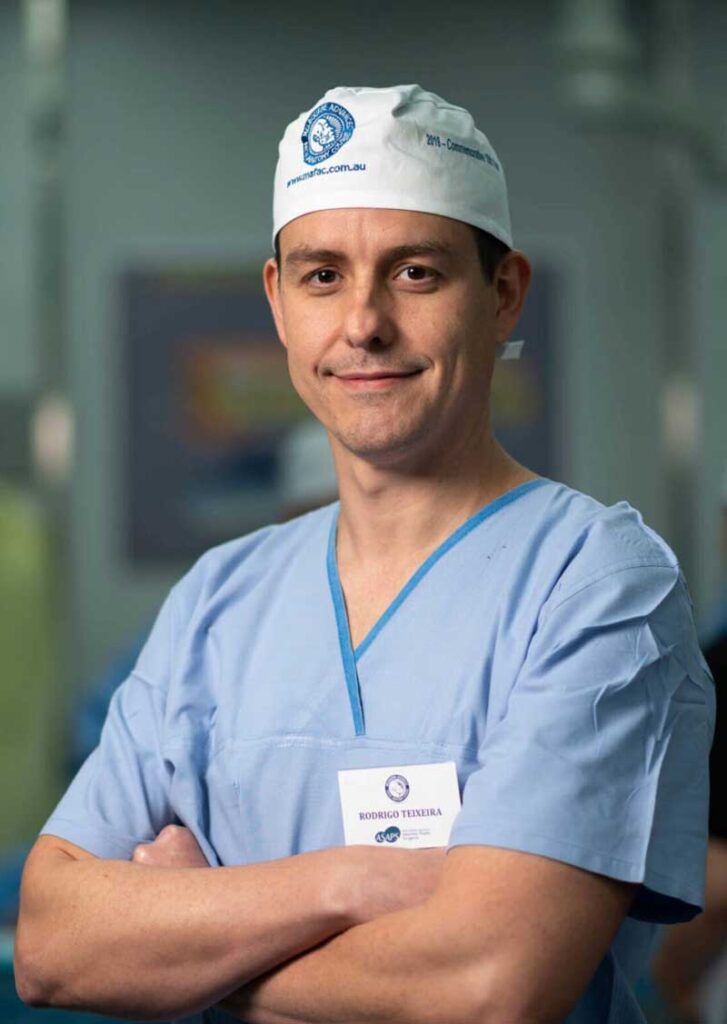
Dr Rodrigo Teixeira (FRACS) specialist plastic surgeon in Melbourne

Learn more about Dr Rodrigo Teixeira and his approach to plastic surgery and patient care.

Deep Plane Facelift Techniques

Classic Deep Plane Facelift

The classic deep plane facelift is the originally described technique, designed to reposition the deeper facial layers, skin, SMAS, and sub-SMAS tissues, as a continuous unit. It primarily restores midface projection, softens deep folds, and refines jawline definition by releasing key retaining ligaments and elevating the deeper supporting structures.

This approach can be modified to emphasise specific areas, such as the midface, jawline, or neck depending on the patient’s anatomy. While primarily designed for mid- and lower-face rejuvenation, it can be extended when additional neck lifting is required.

Extended Deep Plane Facelift

The extended deep plane facelift builds on the classic technique by incorporating platysma and subplatysmal dissection into the neck, allowing greater control of the jawline and cervicomental angle. This approach addresses lower-face heaviness, neck laxity, and platysma bands.

When additional refinement is needed under the chin, it may be combined with a neck lift for submental contouring. By restoring continuity between the midface, jawline, and neck, the extended deep plane facelift provides a smoother and more balanced transition between facial regions.

Mini or Limited Deep Plane Facelift

The mini or limited deep plane facelift applies the same anatomical principles as the classic approach but through smaller incisions and a more focused dissection. It primarily addresses midface descent, and loss of cheek contour, making it suitable for individuals with early or localised ageing changes.

This variation is often performed as an endoscopic midface lift, which typically includes a temporal lift to elevate the lateral cheek and temple region. By restoring midface projection and soft tissue support beneath the eyes, it refines contour with minimal visible scarring and a shorter recovery than a full facelift.

Complementary Techniques and Treatments

A deep plane facelift can be complemented by other surgical or non-surgical procedures to enhance overall facial balance. Common combinations include:

Neck Lift or Submental Contouring – Refines the jawline and neck when laxity, heaviness, or submental fullness is present.

Eyelid Surgery (Blepharoplasty) – Addresses changes in the upper or lower eyelids to improve the lid-cheek transition.

Facial Fat Transfer – Replenishes soft-tissue volume in areas such as the cheeks, temples, or tear troughs to create smoother transitions.

Non-Surgical Treatments – Laser resurfacing, chemical peels, or microneedling can help improve skin texture, tone, and elasticity.

Each combination is discussed during consultation to ensure suitability, safety, and proportional results.

Dr Teixeira's Approach to Deep Plane Facelift

Dr Rodrigo Teixeira, FRACS, is a specialist plastic surgeon that approaches the deep plane facelift with a focus on structural restoration, vector balance, and long-term tissue support. His method is based on advanced anatomical understanding and precise execution, refined through years of performing facial surgery and teaching surgical anatomy internationally. Rather than relying on skin tightening, the deeper layers are carefully released and repositioned to restore midface projection, soften facial folds, and refine jawline definition.

Each surgical plan is tailored to the patient’s anatomy, ageing pattern, and treatment goals. The technique prioritises harmony between the midface, jawline, and neck, aiming to restore proportion without tension or distortion. Continuous refinement of technique, attention to facial dynamics, and commitment to patient-centred care are central to his practice.

Deep Plane Facelift What to Expect From Initial Consultation to Recovery

Consultation

Your consultation begins with a comprehensive assessment of facial anatomy, ageing patterns, and overall health. Dr Rodrigo Teixeira reviews your medical history, discusses your goals, and performs a detailed facial examination to evaluate skin quality, ligament support, and tissue mobility. Clinical photographs are taken to assist with planning, and the consultation includes discussion of potential techniques, recovery expectations, and associated risks.

In accordance with the Medical Board of Australia’s cosmetic surgery guidelines, two consultations are required before any cosmetic procedure. A referral from your GP is needed, and a mandatory seven-day cooling-off period applies before scheduling surgery. This process ensures time for reflection and informed decision-making.

Day of Surgery

Deep plane facelift surgery is performed under general anaesthesia in an accredited hospital. Before the operation, Dr Teixeira reviews the surgical plan and marks incision lines while you meet the anaesthetist to discuss anaesthesia and postoperative comfort.

The procedure typically takes several hours, depending on individual anatomy and whether complementary procedures, such as a neck lift or fat transfer, are included. After surgery, you will be monitored in recovery before being transferred to the ward for one to two nights stay, depending on the extent of surgery and early recovery progress.

Dr Rodrigo Teixeira

Risks and Considerations of Deep Plane Facelift Surgery

All surgical procedures carry potential risks and recovery experiences that vary between individuals. Understanding possible adverse events is an important part of informed consent. All potential risks, benefits, limitations, and the expected recovery pathway are reviewed in detail during consultation.

Common or temporary effects may include:

  • Swelling and bruising of the cheeks, jawline, or neck
  • A feeling of tightness, firmness, or mild discomfort
  • Temporary numbness or altered sensation near the incisions
  • Localised hardness or fullness that softens as tissues settle

Less common or rare complications may include infection, bleeding or haematoma, delayed wound healing, thickened or visible scarring (including hairline changes), contour irregularities, prolonged swelling or fluid collection, and temporary, occasionally prolonged, weakness of the facial nerve branches. Other uncommon issues include earlobe shape change, skin loss (more likely in smokers), or the need for revision surgery. Anaesthesia also carries its own risks, which are discussed with the anaesthetist.

Recovery & Aftercare

Swelling, bruising, and a feeling of tightness are expected in the first one to two weeks and gradually subside as healing progresses. Patients are advised to keep their head elevated, avoid bending or heavy lifting, and apply cool compresses as directed to help reduce swelling and discomfort.

A light facial garment or soft neck collar is usually worn during the early recovery phase to support tissues, minimise fluid build-up, and assist contouring. Wound care instructions are provided in writing, including how to keep incisions clean and when dressings can be changed. Sutures are typically removed within one week, and mild residual swelling may persist for several weeks.

Most patients return to light activities within two to three weeks, though full recovery and tissue settling may take several months. Regular follow-up appointments with Dr Teixeira and his team ensure close monitoring, wound assessment, and support throughout recovery.

Our Melbourne Clinic

Dr Rodrigo Teixeira’s practice is based in Ivanhoe East, Melbourne, within a purpose-designed clinic that provides a calm, private, and professional environment for surgical consultations and follow-up care. The clinic is equipped with facilities that support detailed facial assessment, digital imaging, and ongoing postoperative review, ensuring patient comfort and privacy at every stage.

To learn more or arrange your deep plane facelift in Melbourne, please obtain a referral from your general practitioner and contact our clinic to schedule an appointment.

FAQs

A deep plane facelift works beneath the SMAS layer along the natural glide planes of dissection, and repositioning deeper facial structures, while a SMAS facelift addresses the SMAS and overlying skin layers.

Longevity varies and depends on factors such as skin quality, bone structure, genetics, and lifestyle. While surgery cannot stop the ageing process, it repositions tissues at a structural level, providing durable support to the face.

Costs vary based on the surgeon’s experience, hospital setting, and whether complementary procedures such as a neck lift or fat transfer are included. A personalised quote is provided after consultation.


It is generally performed under general anaesthesia for patient comfort and safety.

Yes. This technique improves lower-face heaviness and softens marionette lines, providing a more defined jawline.

No, eye area rejuvenation typically involves separate procedures such as blepharoplasty and brow lift.

The classic technique focuses on the midface and jawline, while the extended deep plane facelift extends beneath the platysma to treat the neck. In some cases, a separate neck lift may still be advised for submental refinement.

It does not narrow the jawbone. However, as redundant soft tissue is repositioned, the lower face often appears slimmer and more defined along the jawline.

The procedure involves releasing and repositioning deep facial tissues beneath the SMAS, allowing the skin and supporting structures to lift together for a natural appearance. Recovery and outcomes vary depending on individual healing and tissue characteristics.

Facial Surgery Blog

Dr-Rodrigo-Teixeira-at-MAFAC-Mayo

Teaching, Learning and Deep Plane Facelift Surgery: What MAFAC Has Taught Me

The Mendelson Advanced Facial Anatomy Course (MAFAC), previously known as the Melbourne Advanced Facial Anatomy Course, is much more than a course. It is a ...

Read More →
JasperArt

What is an Endoscopic Midface Lift (Ponytail Facelift)?

At Unveil Plastic Surgery, we provide clarity on the endoscopic midface lift (sometimes referred to as a “ponytail lift” or “ponytail facelift”). This is not ...

Read More →
Lip-Lifts

Is a Lip Lift Right for Me? A Patient Guide

A lip lift is a surgical procedure that shortens the skin between the nose and the upper lip (the philtrum), often to increase upper tooth ...
Read More →
Anatomy Dissection Workshop

Demystifying the Deep Plane Facelift

It might be difficult to reconcile that something as seemingly invasive as a meloplasty or facelift can go relatively undetected, but facial surgery techniques have ...
Read More →
Scroll to Top