Facial Surgery
Deep Plane Facelift Melbourne
Dr Rodrigo Teixeira FRACS, Specialist Plastic Surgeon
A deep plane facelift in Melbourne with Dr Rodrigo Teixeira FRACS, Specialist Plastic Surgeon, lifts the deeper supporting tissues of the face and neck, not just the skin. Dr Teixeira uses this approach when descended tissues are changing the shape of the cheeks, jawline and neck. The surgery works beneath a layer called the SMAS. Selected ligaments are released so tissues can be repositioned with less tension on the skin. Depending on the plan, it may treat the midface, jowls, jawline and neck.
Deep plane is one of the approaches described on our facelift surgery page. Treatment is tailored to each person’s anatomy, health and goals.
Suitability
When a Deep Plane Facelift May Be Considered
A deep plane facelift may be considered when descent of deeper facial tissues contributes to changes in cheek contour, facial folds, jowls and loss of jawline definition. Assessment focuses on whether releasing and repositioning these tissues is likely to address the individual’s concerns.
Planning considers tissue thickness and mobility, facial fat distribution, skin elasticity and excess, underlying bone structure, and neck anatomy. A lean face with volume loss requires different planning from a heavier face with descended tissues. The condition of the SMAS and platysma, previous surgery and injectable treatments also influence the approach.
When Another Approach May Be Preferable
Deep plane lifting may offer limited benefit when there is little tissue descent and the main concern is skin texture, isolated volume loss or skeletal proportions. Previous facial or parotid surgery, radiotherapy or significant scarring may require modified dissection. Smoking, uncontrolled medical conditions or bleeding risks may make surgery unsuitable or require postponement. Expectations and the ability to follow postoperative care are also considered.

Learn more about Dr Rodrigo Teixeira and his approach to plastic surgery and patient care.
Techniques
Deep Plane Facelift Techniques
The surgeon works beneath the SMAS through natural tissue planes and spaces, releasing retaining attachments so the supporting layers and attached soft tissues can be mobilised, repositioned and secured. Skin is then redraped, with excess removed where needed.
The descriptions below distinguish the extent of treatment. Terminology varies between surgeons, and facial mobilisation and neck treatment are planned individually.
Midface & lower face
Full Deep Plane Facelift
A full deep plane facelift mobilises tissues through the midface and lower face. This involves release of the zygomatic retaining ligaments in the cheek, masseteric retaining ligaments over the masseter muscle, and mandibular retaining ligaments along the jawline, according to the planned dissection.
These releases allow cheek and lower-face tissues to be repositioned together to address descent, facial folds and jowling. “Full” describes facial mobilisation; it does not automatically include brow or eyelid surgery.
Lower face
Limited Deep Plane Facelift (Lower Face)
A limited deep plane facelift focuses on jowls and jawline definition without fully releasing the zygomatic retaining ligaments. Dissection and ligament release are concentrated in the lower face, with less mobilisation of the upper cheek.
This approach may suit predominantly lower-face concerns and is commonly combined with neck treatment. A mini or limited-incision approach may be appropriate where skin excess is limited. However, the extent of deeper dissection and the length of skin incisions are separate considerations.
Face & neck
Extended Deep Plane Face and Neck Lift
In an extended deep plane face and neck lift, dissection beneath the SMAS continues beneath the platysma into the lateral neck. Release of cervical retaining ligaments allows the platysma and connected lower-face tissues to be repositioned together.[1]
This extension can accompany full or limited facial mobilisation. It addresses the jawline and lateral neck, while central platysma bands or fullness beneath the chin may require additional treatment through a submental incision.
Deep Plane and Endoscopic Approaches
Deep plane describes the anatomical approach; endoscopic describes access and visualisation. Endoscopic techniques also mobilise deeper tissues, with the precise planes depending on the region. An endoscopic brow or midface lift may complement lower-face and neck surgery. A “full-face” plan therefore describes an individual combination, rather than one standard operation.
For further explanation of the anatomy and terminology, read What Is a Deep Plane Facelift and How Is It Different?
Individual modifications
Advanced Deep Plane Facelift Techniques
Selected additional manoeuvres may address deeper muscle and fat structures that contribute to facial folds, fullness or uneven volume distribution. These are individually assessed modifications, rather than routine steps required for every patient.
Zygomaticus Major Muscle Plication
The zygomaticus major elevates the corner of the mouth during smiling. Selective plication, or tightening with sutures, has been described alongside deep fat mobilisation to support the lower midface.[2] Assessment includes muscle laxity, facial symmetry and the potential effect on smile movement.
Deep Fat Compartment Mobilisation and Volume Redistribution
The buccal fat pad and other deep cheek fat compartments may be mobilised or repositioned when their position contributes to lower-cheek fullness or adjacent hollowing.[2,3] Suspension or transposition redistributes existing volume; it differs from fat removal or adding volume through fat transfer.
Deep Neck Contouring
Fullness beneath the platysma may require selected contouring of deep fat, prominent digastric muscles or submandibular glands. Central platysma repair may also address muscle separation or bands.[4] These procedures carry additional risks, including bleeding, nerve injury and salivary complications with gland surgery.
Further details are available on our neck lift page.
Complementary Techniques and Treatments
Eyelid surgery may address upper or lower eyelid concerns, while facial fat transfer may be considered for volume loss. Skin treatments can address selected texture, pigmentation and surface-line concerns that lifting does not directly treat. Each addition is assessed for its potential benefit, risks and recovery requirements, including whether procedures should be combined or staged.
Our approach
Dr Teixeira’s Approach to Deep Plane Facelift
Dr Rodrigo Teixeira plans surgery around the relationship between tissue position, skin excess, facial volume and underlying anatomy. The extent of release, direction of repositioning and deeper fixation are selected to address individual concerns while respecting facial proportions, movement and expression.
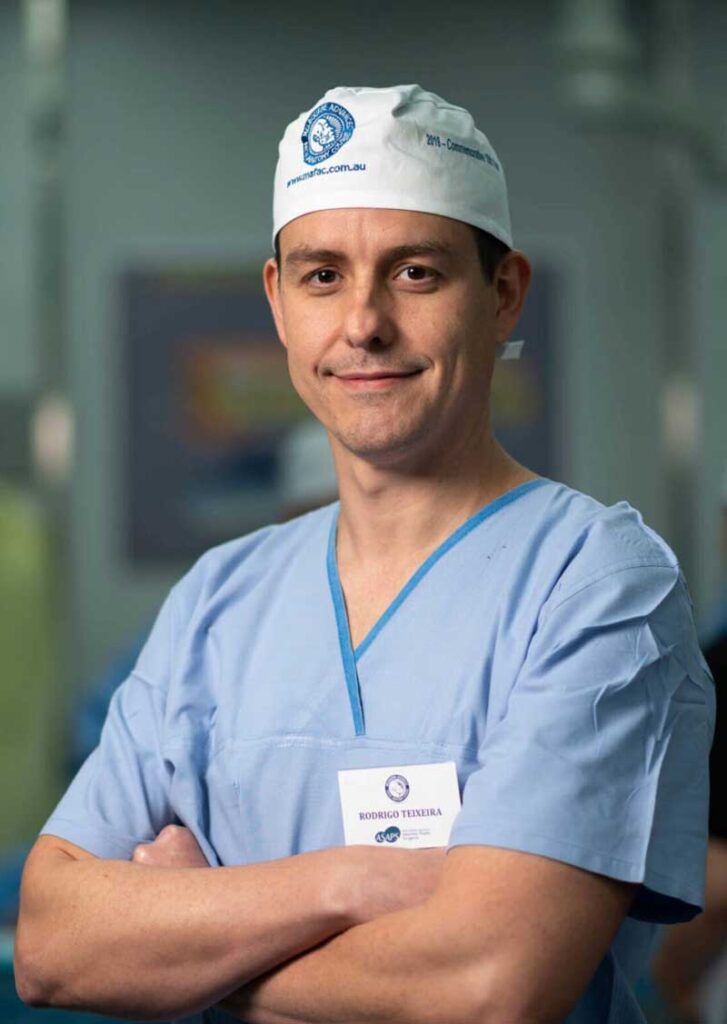
Dr Teixeira is a Specialist Plastic Surgeon and a faculty member of the Mendelson Advanced Facial Anatomy Course (MAFAC). His consultation includes discussion of the proposed technique, alternatives and the balance between potential benefit, recovery and risk.
Scars
Incisions and Scars
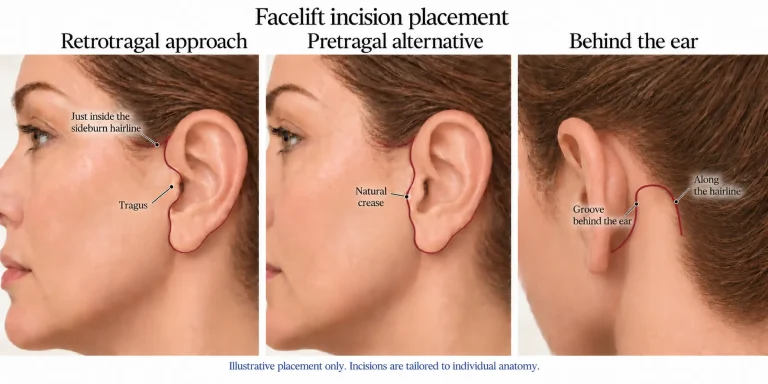
Incisions are usually positioned around the ears and may extend into or along the hairline. Their extent depends on the areas treated and the skin requiring removal. An additional incision beneath the chin may be needed for direct neck treatment.
Placement and closure consider the hairline, tragus and earlobe contours. All incisions leave scars, and their visibility and maturation vary. Read more about facelift incisions and scars around the ears.
Your journey
Deep Plane Facelift: Consultation and Surgery
Step 1
Consultation
Consultation includes a facial examination, medical and treatment history, clinical photographs and discussion of your goals. The proposed operation, alternatives (including no surgery), risks, recovery and costs are reviewed before you decide whether to proceed. Any additional muscle, fat or neck procedures are discussed individually.
Step 2
Day of Surgery
Deep plane facelift surgery is performed under general anaesthesia in an accredited hospital. Dr Teixeira reviews the surgical plan and markings, and the anaesthetist discusses your anaesthetic care.
Operating time and hospital stay depend on the extent of surgery, additional procedures and clinical needs. Your anticipated stay and arrangements for support after discharge are discussed beforehand.
Informed consent
Risks and Considerations of Deep Plane Facelift Surgery
Swelling, bruising, discomfort, tightness and altered sensation are expected during early recovery. Some swelling, firmness or numbness may persist for longer.
Possible complications include:
- Bleeding or haematoma, which may require further surgery.
- Infection, fluid collection or delayed wound healing.
- Skin loss, with increased wound-healing risks in smokers.
- Visible or thickened scars, hair loss near incisions, or changes to the hairline or earlobe.
- Facial nerve injury causing temporary or, rarely, permanent weakness.
- Persistent altered sensation, asymmetry, changes in facial movement or contour irregularities.
- Salivary leakage or collections where salivary structures are involved.
- An unsatisfactory outcome or the need for revision surgery.
- Anaesthetic complications and blood clots.
Individual risks depend on health, anatomy and the procedures performed. These are discussed during consultation, together with measures to reduce them. Outcomes cannot be guaranteed.
Aftercare
Recovery and Aftercare
Swelling, bruising and tightness generally become less noticeable over the first few weeks, while residual swelling and tissue settling may continue for several months.
Written instructions cover wound care, head elevation, any dressings or garments, and restrictions on lifting and exercise. Follow-up appointments allow assessment of healing and guidance on resuming activities. Return to work and social activities depends on the extent of surgery, individual recovery and usual responsibilities.
For more information about consultation, preparation and recovery, see our facelift surgery page.
Fees
Cost of a Deep Plane Facelift in Melbourne
Cost depends on the extent of facial and neck treatment, operating time, hospital stay and additional procedures. A limited lower-face operation and a combined face, neck and upper-face plan involve different requirements.
The overall cost includes the surgeon’s fee, anaesthetist’s fee and hospital charges, with other applicable costs identified separately. Following assessment, you receive an individual written estimate explaining the proposed treatment, inclusions and separately charged fees.
Surgery undertaken solely for cosmetic purposes is generally not eligible for Medicare or private health insurance benefits. Eligibility depends on the clinical indication and applicable criteria.
Consultation fees are separate. Current fees and information about financial consent and the required cooling-off period are available on our pricing page.
Facelift and Neck Lift Surgery
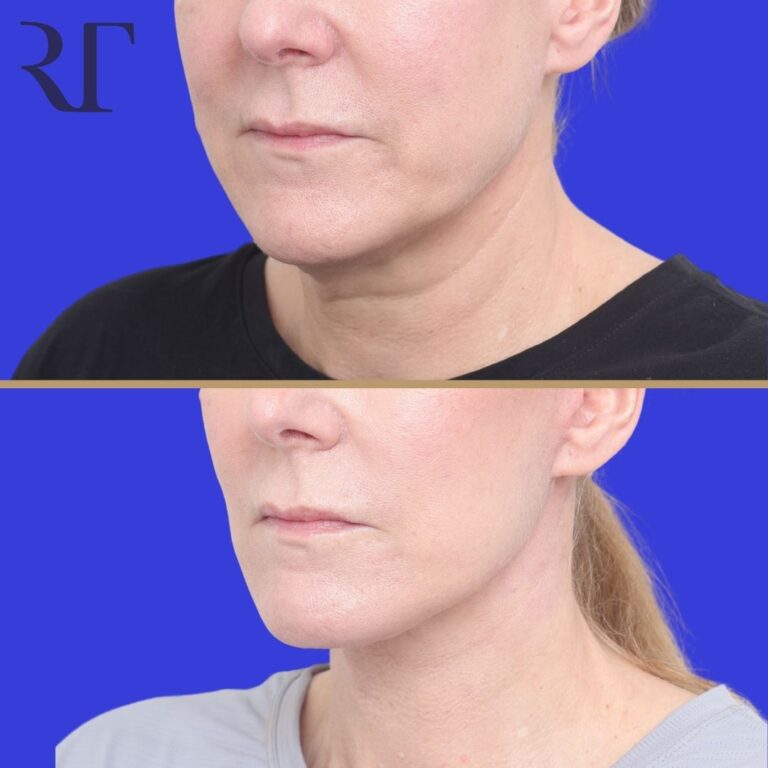
Before & After Gallery
Photographs illustrate individual outcomes and do not predict another person’s result. Results vary with anatomy, the procedures performed and healing.
Our Melbourne Clinic
Dr Rodrigo Teixeira consults at Unveil Plastic Surgery, Level 2, 244 Lower Heidelberg Road, Ivanhoe East, Melbourne.
To arrange a consultation, obtain a referral from your general practitioner or another medical specialist and contact the clinic on (03) 9000 3800.
Questions
Deep Plane Facelift FAQs
Deep plane surgery is itself an approach to treating the SMAS. It releases selected attachments beneath this layer so the supporting tissues and attached soft tissues can move together. Other SMAS techniques fold, suture or elevate the layer differently. The extent of release and mobilisation matters more than a simple “deep versus superficial” distinction.
There is no fixed duration for every patient. Surgery changes tissue position and contour, but ageing continues. Skin quality, underlying anatomy, genetics, lifestyle and treatment extent influence longevity. Some changes may remain evident for years, although surgery cannot prevent future laxity or guarantee how long an individual result will last.
Costs vary with the surgical plan, operating time, hospital requirements and additional procedures. An individual written estimate is provided following assessment, detailing the proposed treatment and relevant fees. The cost section above explains the main components and links to current consultation fees.
Some selected facelift procedures can be performed under local anaesthesia with or without sedation. In Dr Teixeira’s practice, deep plane facelift surgery is performed under general anaesthesia in an accredited hospital. Planning considers the operation’s extent and duration, your health and the anaesthetist’s assessment.
Repositioning descended lower-face tissues may reduce jowling and soften some folds around the mouth. Marionette lines also reflect volume changes, skin quality and underlying anatomy, so they may remain visible. Assessment identifies which concerns lifting may address and whether another treatment is appropriate.
It does not automatically include eyelid or brow surgery. Cheek repositioning may influence the nearby contour, but eyelid skin excess, fat prominence and brow descent require separate assessment. Additional procedures may be considered where appropriate.
It may. An extended deep plane face and neck lift continues beneath the platysma into the lateral neck. Central bands or fullness beneath the chin may require additional treatment. Your surgical plan should specify the areas and structures included.
It does not change jawbone width. Repositioning descended tissues may alter the contour around the jowls and jawline. Bone structure, muscle bulk, fat distribution and skin laxity all influence lower-face shape, so a narrower appearance is not guaranteed.
The surgeon works beneath the SMAS, releases selected retaining attachments, and mobilises and secures the supporting tissues. Skin is redraped and excess removed where needed. Facial release, neck treatment and additional manoeuvres are tailored to the individual plan.
For further discussion of appearance, expectations and longevity, read Demystifying the Deep Plane Facelift.
Selected References
- Extended Deep Plane Facelift: Incorporating Facial Retaining Ligament Release and Composite Flap Shifts to Maximize Midface, Jawline and Neck Rejuvenation.
- Modified Deep-Plane Face Lift and Lower Midface Lifting Using Deep Fat Compartment Mobilization and Zygomaticus Major Muscle Plication.
- Sub-SMAS Transposition of the Buccal Fat Pad.
- Deep Tissue Sculpture in Neck Rejuvenation: Review of 641 Consecutive Cases.
Journal
Facial Surgery Blog
Facelift Incisions and Scars Around the Ears

Demystifying the Deep Plane Facelift
What Is a Deep Plane Facelift and How Is It Different?
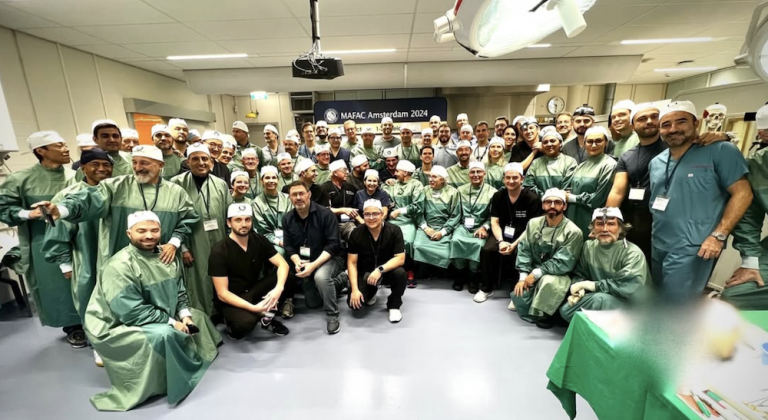
Surgical Insights from MAFAC and QMP Amsterdam 2025
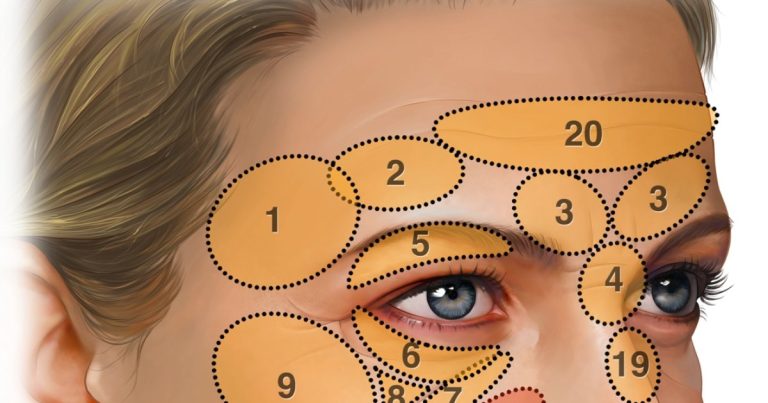
Facelift Surgery with Fat Transfer: Addressing Facial Volume Loss