
Rhinoplasty Recovery: What Influences Swelling, Definition and Results
Understanding Rhinoplasty Surgery and Recovery
Rhinoplasty is a highly individualised procedure, and so is the recovery. While surgical technique, such as open or closed approaches, plays a role in early swelling and healing, it is just one part of a more complex picture. Personal factors like skin thickness, overall health, and especially adherence to aftercare guidance can significantly shape recovery outcomes.
Open rhinoplasty, which uses a small incision across the columella, allows greater surgical visibility and is often preferred for complex reshaping. It may result in more visible early swelling. Closed rhinoplasty, performed through internal incisions, typically results in less initial swelling and no visible scar. While these technical factors are relevant, they are not predictive of each patient’s healing process.
A recent patient who underwent an open structural rhinoplasty with septoplasty experienced minimal bruising and swelling. On review, her recovery routine was exemplary, following a nutrient-rich, anti-inflammatory diet, avoiding alcohol and caffeine, maintaining hydration, using Hilotherm cooling therapy consistently, and sleeping elevated for weeks. This dedication underscores how proactive aftercare can positively impact healing.
While this level of discipline may not be typical or necessary for everyone, it serves as a powerful reminder that patients play an active role in their own recovery. Many people assume outcomes rely solely on the surgeon or surgical method, but optimal results arise from a shared responsibility: precise surgical technique supported by thoughtful preparation and committed aftercare.
No two recoveries are the same. Variables such as skin quality, age, medical history, and lifestyle habits all contribute to the healing process. While careful adherence to post-operative instructions supports the best possible recovery, outcomes will always vary, and no specific result can be guaranteed.
How Long Is Rhinoplasty Recovery?
Rhinoplasty recovery follows a general timeline, but the pace and experience vary from person to person. In the first week, swelling and bruising are most prominent, and an external splint is typically used. When the septum is involved, internal stents may be placed. By week two or three, visible bruising often improves, and many patients return to light daily activities or work.
Light exercise can usually resume after three weeks, but contact sports or high-impact activities should be avoided for at least six weeks. By the end of the first month, noticeable swelling continues to reduce. Most of the swelling, about 70–80%, typically settles within the first three months.
The full healing time of rhinoplasty often extends over 12 to 18 months. While the nose may look refined earlier, subtle changes and final definition, especially in the nasal tip, continue to develop as residual swelling resolves.
How Skin Type Affects Healing and Final Results
Skin characteristics and pre-existing conditions significantly influence rhinoplasty recovery and the appearance of final results. Individuals with thicker or oilier skin may find that swelling takes longer to subside and definition appears more gradually. Thicker skin can also make fine structural changes less visible. Conversely, thinner skin may reveal results sooner but can make minor irregularities more noticeable, and in some cases may even need additional cover tissue for camouflage.
Conditions like rosacea, acne, or sensitive skin can contribute to prolonged redness or irritation during recovery. Surgeons take these factors into account during planning and may recommend tailored skincare or topical treatments post-operatively to support healing.
Bulbous Nose or Tip Rhinoplasty: How Shape Affects Recovery
Patients seeking a bulbous nose rhinoplasty, typically involving a rounded, fuller nasal tip, often have thicker skin and more fibrous subcutaneous tissue, which can extend the healing timeline. Tip swelling may persist for several months, and definition tends to emerge more gradually.
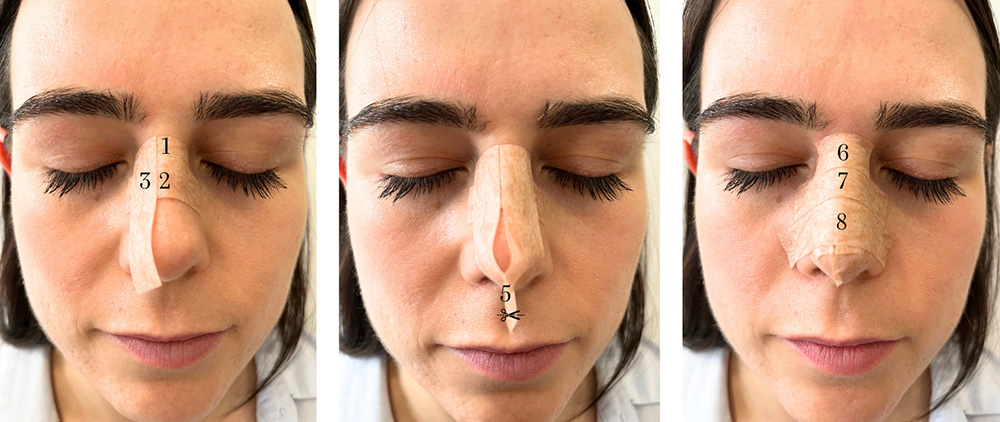
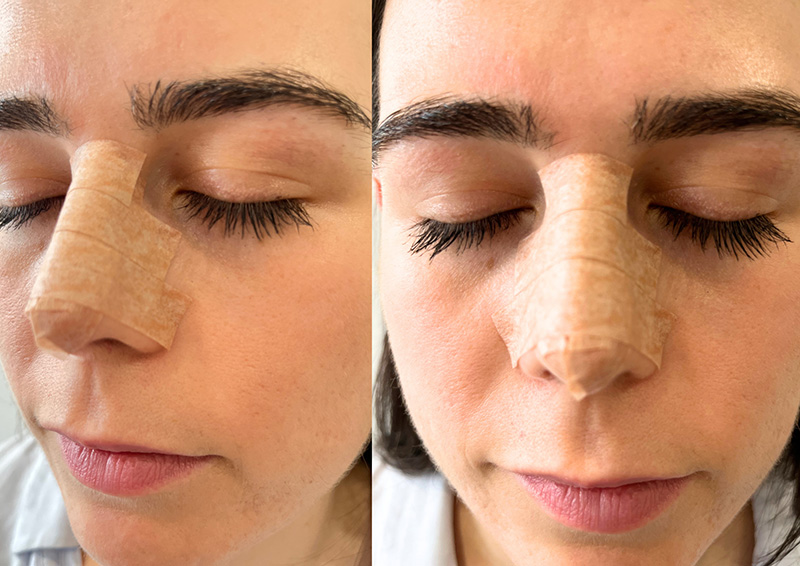
Surgical techniques such as cartilage reshaping or suturing are tailored to refine and support the tip, but skin characteristics and healing response largely influence when results become visible. In some cases, interventions like nose tip taping, or low-dose steroid injections may be recommended during follow-up.
It’s common to feel uncertain early in recovery if changes aren’t yet apparent, but with ongoing aftercare and time, nasal tip definition steadily improves over the first year and beyond.
Healing After Rhinoplasty: Aftercare and Follow-Up
Effective aftercare plays a vital role in supporting recovery and minimising complications. Key recommendations include keeping the head elevated, avoiding pressure or trauma to the nose, using Hilotherm cooling as directed, and protecting the skin from sun exposure.
In some cases, additional treatments such as topical agents or low-dose steroid injections may be advised to manage persistent swelling, scar formation, or skin reactivity. Regular follow-up appointments allow the surgeon to monitor progress and adjust care based on individual needs.
At Unveil, during your first two weeks, we’ll perform taping at your follow-up appointments to ensure optimal healing and support. For patients who are not local or those who may require taping for a longer period, we offer the option to continue taping at home after the initial recovery phase. If you’d like to tape at night or maintain the taping beyond the first two weeks, we’ll guide you on how to do this safely and effectively on your own.
Although healing times vary, patients who follow post-operative advice closely are more likely to experience a smoother recovery. Results are individual and influenced by many factors, so no specific outcome can be guaranteed.
When to Expect Final Definition and Results
Most swelling improves within the first few months, but refinement continues well beyond. The nasal tip often takes longer to define as residual swelling gradually settles. Final results typically become clearer between 12 to 18 months post-surgery, with subtle changes in contour and structure emerging slowly over time.
Maintaining realistic expectations is key, as healing varies from person to person. For patients with thicker skin or more complex procedures, results may take longer to fully reveal. Ongoing follow-up supports progress and allows your surgeon to tailor care as healing continues.
*Disclaimer: All surgical or invasive procedures carry risks. A second opinion may be sought from an appropriately qualified specialist plastic surgeon.
FAQs
Pain usually peaks in the first few days and improves over 1-2 weeks. Some discomfort may continue depending on the procedure and healing.
Procedures involving muscles, such as abdominoplasty or submuscular breast augmentation, are often associated with more discomfort.
Yes. Many patients manage pain with paracetamol, anti-inflammatories (if appropriate), controlled cooling, early movement, and relaxation techniques. Opioids are used only when needed.
Dr Rodrigo Teixeira is a Specialist Plastic Surgeon in Melbourne whose practice is focused on facelift and facial surgery, including neck lift, eyelid and brow surgery, rhinoplasty and facial fat transfer. His approach is anatomy-led, with careful assessment and treatment planning tailored to the individual. He is a Fellow of the Royal Australasian College of Surgeons (FRACS) and a faculty member of the Mendelson Advanced Facial Anatomy Course (MAFAC).
Please note that any surgical or invasive procedure carries risks, and outcomes vary between individuals. If you have concerns about your facial appearance or are considering surgery, please speak with your general practitioner, who can provide a referral to a qualified Specialist Plastic Surgeon.