Breast Implant Surgery in Melbourne (Augmentation Mammoplasty)
Breast implant surgery, also known as augmentation mammoplasty, is a procedure designed to redefine breast volume, shape, and proportion. For individuals considering breast implant surgery in Melbourne, the decision is often deeply personal, and may be influenced by natural breast size, asymmetry, or changes over time such as pregnancy or weight fluctuations. A carefully planned breast augmentation aims to improve balance while respecting your anatomy and preferences.
What Are Breast Implants? (Augmentation Mammoplasty)
Breast implants are medical devices placed beneath the breast tissue or the chest muscle to increase breast size, improve symmetry, or restore volume.
There are several types of breast augmentation implants available.
- Saline implants are filled with sterile salt water and may feel firmer in some patients. If they rupture, deflation is usually noticeable.
- Silicone gel implants are filled with cohesive silicone gel and are often selected for a softer feel.
- Highly cohesive silicone implants (sometimes called “gummy bear” implants) are designed to retain their shape more firmly.
Choosing between different types of breast implants depends on your body proportions, tissue characteristics (including skin quality and breast shape), and goals. These factors are assessed during consultation so the plan aligns with your anatomy and realistic expectations.

Breast Implant Techniques
Implant Pocket
Breast implant techniques vary depending on anatomy and the type of result you’re aiming for. One of the key decisions involves implant placement. Implants may be positioned beneath the pectoral muscle (submuscular) or above the muscle (subglandular). Submuscular placement can create a more gradual upper-breast contour in some patients, while subglandular placement may be suitable in selected cases with sufficient tissue coverage. In some situations, other planes (such as subfascial) may also be discussed depending on anatomy and goals.
Incision Placement
Incision placement is another consideration. Common options include an incision beneath the breast fold, around the areola, or within the armpit. Each approach has advantages and limitations related to scarring, access, and implant positioning. Technique selection is guided by factors such as tissue thickness, degree of breast ptosis (sagging), chest wall anatomy, and implant size. These factors help inform trade-offs such as implant visibility, implant movement with muscle contraction, and long-term tissue support.
Hybrid augmentation (implant + fat grafting)
In selected patients, breast augmentation may be planned as a “hybrid” approach, combining an implant with targeted fat grafting. This can help refine contour, improve symmetry, or soften implant edges in areas with limited tissue coverage. Suitability depends on factors such as available donor fat, tissue quality, and goals. Fat graft survival varies, and specific risks can include fat necrosis (firmness/lumps), oil cysts, and the possibility of staged treatment.
Our Surgical Approach to Breast Implant Surgery
A thoughtful, individualised surgical approach is central to breast augmentation planning. The philosophy behind breast implant surgery focuses on proportion, tissue preservation, and long-term balance rather than volume alone. Patient safety is prioritised throughout the process. Careful measurements and detailed preoperative planning are used to support surgical decision-making and help reduce avoidable risks. Implant selection, placement, and technique are discussed in the context of your anatomy, tissue characteristics, and lifestyle considerations.
Dr Rodrigo Teixeira (MED0001650480) is a registered medical practitioner with specialist registration in Surgery (Plastic Surgery) and a Fellow of the Royal Australasian College of Surgeons (FRACS).
What to Expect at the Breast Implant Surgery Consultation
Your consultation is designed to give you clear, personalised advice so you can make a well-informed decision. We’ll take the time to understand your motivations and goals, discuss suitable treatment options, as well as the practical side of surgery and recovery. As part of best practice and regulatory requirements, we also assess expectations and screen for conditions such as body dysmorphic disorder (BDD).
Because breast augmentation is a regulated cosmetic procedure in Australia, a referral is required to proceed, ideally from your usual GP, or another independent GP or specialist. During your appointment, we’ll review your medical history and perform a physical examination, assessing factors that guide implant planning such as tissue thickness, skin quality, breast shape, chest wall anatomy, ptosis (sagging) and asymmetry.
The next step is to schedule a second consultation to confirm the surgical plan, answer any remaining questions, and discuss hospital admission and recovery in more detail. After this, a minimum 7-day cooling-off period applies before surgery can be booked.

What You Must Know Before Considering Breast Implant Surgery
POTENTIAL RISKS
It’s important to understand the risks involved with any surgery. The decision to undergo breast implant surgery should be based on weighing potential risks against potential benefits, in the context of your anatomy, health, and goals. Although most patients do not experience serious complications, it’s essential to discuss risks and trade-offs with your surgeon so you understand what surgery can and can’t control.
Breast implant surgery carries risks that are common to many operations, as well as risks specific to implants. If complications occur, further treatment or additional surgery may be required.
Some potential risks of breast implant surgery include:
- Infection
- Bleeding or fluid collection (haematoma/seroma)
- Delayed wound healing or wound separation
- Scarring, including thickened or raised scars in some people
- Changes in nipple or breast sensation, which may be temporary or longer-lasting
- Implant malposition, asymmetry, or rotation
- Visible rippling or implant edges, which may be more noticeable with limited tissue coverage
- Capsular contracture (firm scar tissue around the implant)
- Implant rupture
Long-term considerations: Breast implants are not lifetime devices, and some patients may require further surgery over time.
RARE IMPLANT-ASSOCIATED CONDITIONS
Rare implant-associated conditions have been reported internationally, including breast implant–associated anaplastic large cell lymphoma (BIA-ALCL), which has been reported more commonly with textured implants, and very rare reports of other capsule conditions.
Some patients also report a pattern of systemic symptoms sometimes referred to as breast implant illness (BII) or systemic symptoms associated with breast implants (SSBI). There is no single diagnostic test for this symptom pattern, and assessment involves considering other possible causes.
SMOKING AND HEALING
Smoking and nicotine exposure can increase the risk of wound-healing problems and infection. If you smoke or vape, your surgeon will discuss cessation recommendations before and after surgery to help reduce avoidable risk.
What to Expect During Recovery & Aftercare Following Breast Implant Surgery
Recovery occurs gradually. In the first 24–48 hours, swelling, tightness, and discomfort are common and are typically managed with prescribed medication. During the first week, activity is limited and you should avoid heavy lifting and reaching or stretching your arms high above your head. Sleeping on your back is also recommended, and sleeping on your breasts is avoided until healing is complete and is cleared by your surgeon.
Recovery milestones vary between individuals and may be influenced by the surgical plan, including whether the implant is placed above or beneath the chest muscle. Many patients report that submuscular placement involves more early tightness and soreness, and that discomfort may take a little longer to settle, although timelines differ.
Recovery milestones (guide only):
- Days 1–2: swelling/tightness; rest and support bra
- Week 1: light activity only; avoid overhead reaching and lifting
- Weeks 1–2: many return to desk-based work and light daily activity (if comfortable)
- Weeks 4–6: gradual return to exercise as advised; avoid heavy lifting/chest loading until cleared
- 3+ months: swelling continues to settle; scars mature over time
Post-surgery care includes wound care, scar management guidance, wearing compression garments as advised, and scheduled follow-up appointments to monitor healing.
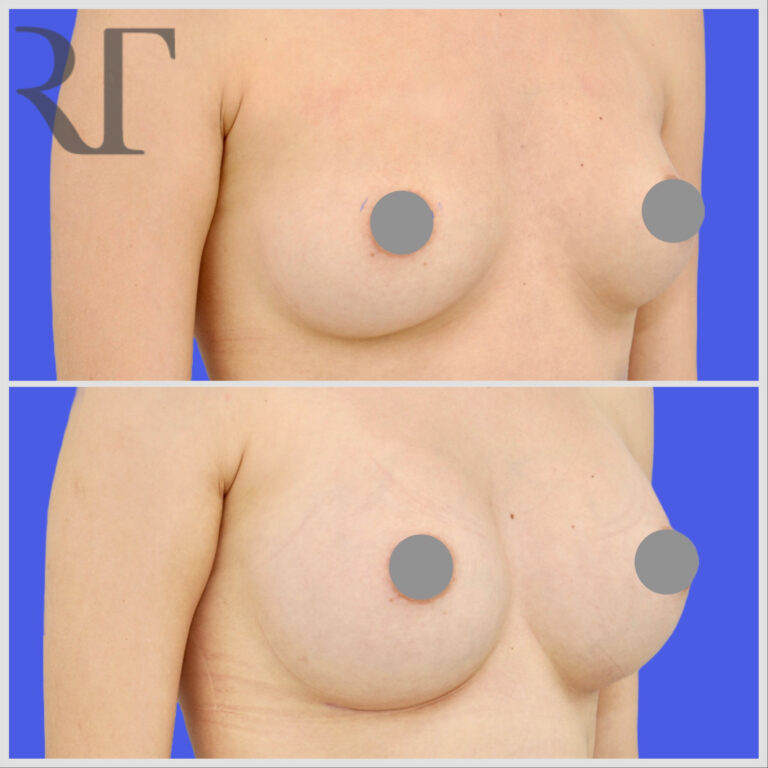
Breast Augmentation Surgery
Before & After Gallery
Our Melbourne Clinic
Our Melbourne clinic, located in Ivanhoe East, offers a calm, professional environment for patients considering breast implants in Melbourne. Consultations are with Dr Rodrigo Teixeira (MED0001650480), a registered medical practitioner with specialist registration in Surgery (Plastic Surgery) and a Fellow of the Royal Australasian College of Surgeons (FRACS). Our focus is on patient safety, clear communication, and personalised planning, with structured follow-up to support recovery.
Breast Implants FAQs
Breast implants are long-lasting medical devices, but they are not considered lifetime products. Regular monitoring is recommended, and some people may need further surgery over time due to factors such as implant changes, capsular contracture, or personal preference.
Breastfeeding may still be possible after breast implant surgery, but it can’t be guaranteed. The likelihood depends on factors such as incision location, implant position, and individual anatomy. If future breastfeeding is important to you, discuss this during consultation.
Return to work varies depending on your recovery and the type of work you do. Many people return to light duties within one to two weeks, while physically demanding roles may require longer.
Common options include saline and silicone gel implants, including highly cohesive silicone (“gummy bear”) implants. The most appropriate option depends on your anatomy, tissue characteristics, and goals, and is discussed during consultation.
If you are considering breast augmentation in Melbourne, the next step is to arrange a consultation to receive personalised advice. Contact our clinic to discuss your options in a supportive and professional setting.
Plastic Surgery Blog
The Unveiling of Unveil Aesthetics & Plastic Surgery

Pain Management After Plastic Surgery