





About

About Dr Rodrigo Teixeira, FRACS

Dr Rodrigo Teixeira is a Specialist Plastic Surgeon in Melbourne with a practice focused on face and neck lift surgery, rhinoplasty, eyelid surgery, and related facial procedures. His work brings together aesthetic and reconstructive experience, with an approach centred on careful assessment, anatomical diagnosis, and treatment planning tailored to the individual.

Experience

Experience, Anatomy, and an Individualised Approach​

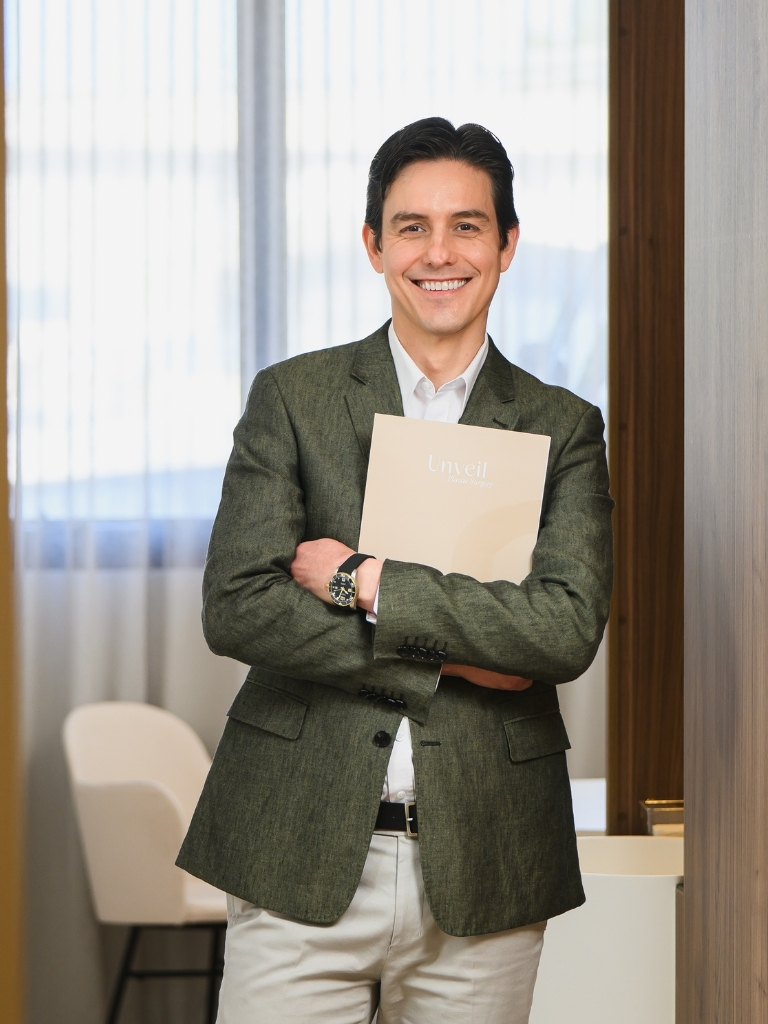
Dr Rodrigo Teixeira (FRACS) specialist plastic surgeon in Melbourne

His principal areas of practice include facelift and neck lift surgery, eyelid and brow surgery, rhinoplasty and facial fat transfer. This work is grounded in experience across both aesthetic and reconstructive surgery, which has shaped a careful approach to facial assessment, surgical planning, and long-term structural preservation.

In facial surgery, visible concerns are not assessed in isolation. Facial balance, skeletal support, soft tissue position, skin quality, movement, and function may all influence what is seen clinically and how treatment should be planned. This is why experience and judgement matter alongside technical knowledge. Not all faces age in the same way, and not every patient requires the same procedure or the same surgical plan.

For patients, this means recommendations are based on what is appropriate to the individual, not simply on the procedure initially requested. In some cases, surgery may be appropriate. In others, a different procedure, a staged plan, or no surgery may be the more appropriate recommendation.

Why plastic surgery

Why He Chose Plastic Surgery

Dr Teixeira’s interest in plastic surgery began early in his medical training in Brazil, when he observed a reconstructive operation that inspired the kind of surgeon he wanted to become. He was drawn to the combination of anatomy, technical precision, judgement, and the opportunity to make a meaningful difference through surgery.

That early experience led to a long training pathway across reconstructive and aesthetic plastic surgery, first in Brazil and later in Australia. Throughout that journey, his interest remained closely connected to facial surgery, where appearance, structure, and function often need to be considered together.

Training

Training, Qualifications, and Professional Background

Brazil

Graduation and Specialist Training

Dr Teixeira graduated from the Faculdade de Ciências Médicas da Santa Casa de São Paulo in Brazil, where he also completed his early medical and surgical training. He later undertook accredited plastic surgery training through the Brazilian Society of Plastic Surgery before moving to Melbourne for further fellowship training.

Australia

Fellowship Training

His fellowship training in Australia included advanced aesthetic plastic surgery, craniofacial and cleft surgery, paediatric plastic surgery, and burns. He subsequently achieved Fellowship of the Royal Australasian College of Surgeons (FRACS) in Plastic and Reconstructive Surgery, adding Australian specialist recognition to his earlier plastic surgery qualification in Brazil.

Reconstructive surgery

A Reconstructive Foundation in Facial Surgery

After further work in Brazil, including treatment of cleft lip and palate, primary and secondary rhinoplasty, facial clefts, and other complex facial anomalies, he returned to Melbourne and now works across both private and public practice. This breadth of training and experience continues to shape his perspective in facial surgery, where careful planning often depends on understanding both aesthetic goals and reconstructive principles.

Philosophy

Surgical Approach and Philosophy

Dr Teixeira’s surgical approach is based on careful assessment, anatomical diagnosis, and clinical judgement. In facial surgery, the visible concern is not always the primary problem. Bone, cartilage, soft tissue support, skin quality, movement, and function may all contribute to what is seen and to what treatment, if any, is appropriate.

Understand the underlying anatomy first, then plan surgery in a way that respects structural integrity, facial balance and function.

His philosophy is to understand the underlying anatomy first, then plan surgery in a way that respects structural integrity, facial balance, and function. This often means thinking in layers and recognising that not all concerns are best addressed in the same way. His reconstructive background continues to influence this approach and reinforces the importance of preservation, proportion, and restraint.

For patients, this means treatment recommendations are guided by what is appropriate, not simply by what is possible. The aim is not to overcorrect or impose a standardised result, but to recommend a treatment plan that is proportionate, considered, and tailored to the individual.

Teaching

Teaching, Anatomy Education, and Public Hospital Roles

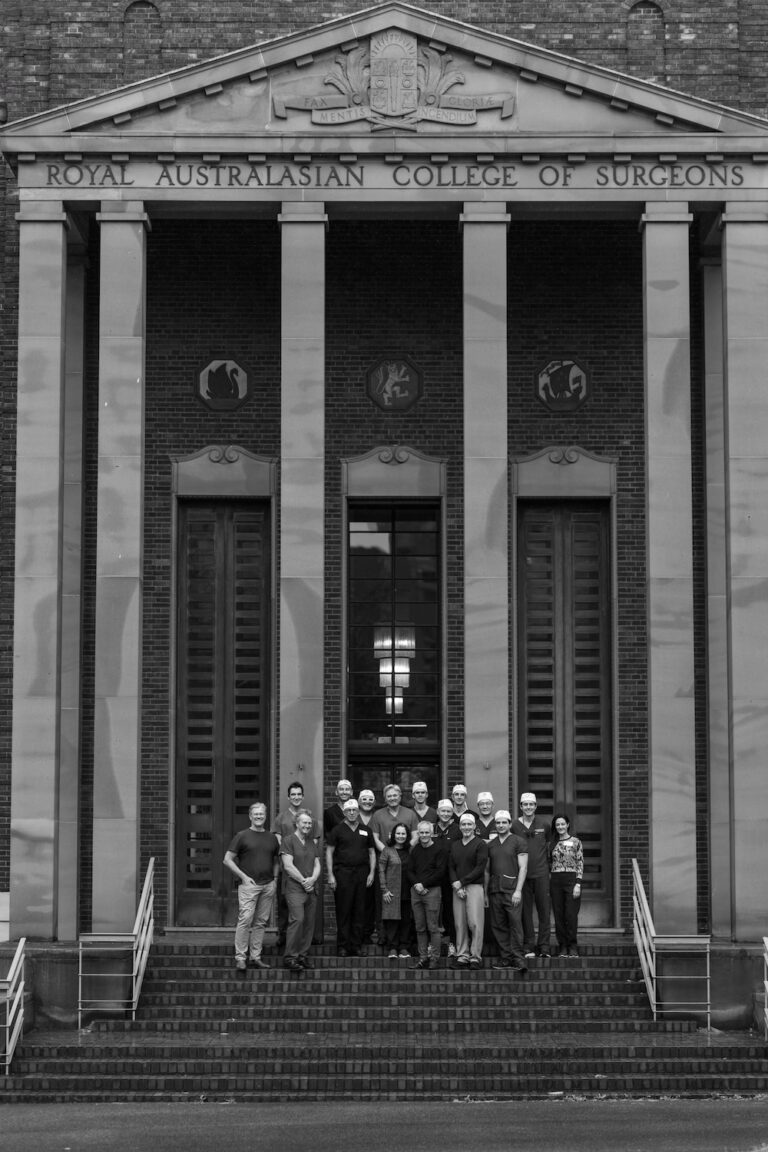
Dr Rodrigo Teixeira with MAFAC 2022 faculty at the Royal Australasian College of Surgeons, Melbourne
Mendelson Advanced Facial Anatomy Course (MAFAC) logo

Dr Rodrigo Teixeira with MAFAC 2022 faculty, Royal Australasian College of Surgeons

MAFAC and Advanced Facial Anatomy Teaching

A significant part of Dr Teixeira’s professional work is teaching anatomy and applying it to aesthetic practice. He is a faculty member of the Mendelson Advanced Facial Anatomy Course (MAFAC), where advanced facial anatomy is taught in a surgical context. This reflects a core part of his practice philosophy: everything in facial surgery ultimately comes back to anatomy. With a background in plastic surgery and craniofacial surgery, he brings a detailed understanding of facial structure, support, movement, and tissue layers to both teaching and clinical practice. Teaching alongside leading international surgeons keeps his own practice in step with current techniques worldwide. He writes about this in What MAFAC Has Taught Me and Surgical Insights from MAFAC and QMP Amsterdam 2025.

Teaching Roles and Public Hospital Work

Dr Teixeira is also a faculty member of the ASAPS Anatomy for Injectors (AFI) workshop and remains actively involved in public hospital work, surgical education, and academic teaching in Melbourne. He continues reconstructive facial surgery work at The Royal Children’s Hospital. He previously served as Head of the Plastic Surgery Unit at Northern Health.

Credentials

Qualifications and Registration

Qualifications

  • Medical Degree and Internship, Faculdade de Ciências Médicas da Santa Casa de São Paulo, Brazil
  • Specialist Plastic Surgeon, Brazilian Society of Plastic Surgery (SBCP)
  • Fellow of the Royal Australasian College of Surgeons (FRACS), Plastic and Reconstructive Surgery

Registration

  • AHPRA MED0001650480
    Registered Medical Practitioner
    Specialist registration in Surgery – Plastic Surgery

Professional Associations

  • Royal Australasian College of Surgeons (RACS)
  • Australian Society of Plastic Surgeons (ASPS)
  • Australasian Society of Aesthetic Plastic Surgeons (ASAPS)
  • International Society of Aesthetic Plastic Surgery (ISAPS)
  • American Society of Plastic Surgeons
Professional memberships: RACS, ASPS, ASAPS, ISAPS, American Society of Plastic Surgeons, SBCP

Journal

From the Journal

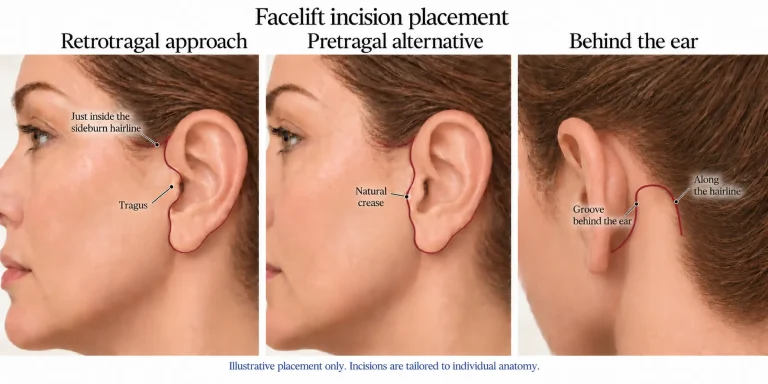
Illustration of facelift incision placement around the ear: retrotragal approach, pretragal alternative and the groove behind the ear

Facelift Incisions and Scars Around the Ears

Where facelift incisions sit around the ear, how the tragus and earlobe shape are protected, what scars look like as they heal, and how scar ...

Read More →
Watercolour illustration of a woman in her fifties in profile, representing natural facial ageing

Demystifying the Deep Plane Facelift

Common questions about the deep plane facelift, from whether to try smaller treatments first to age, recovery, scars and how long results last.
Read More →
Dr Rodrigo Teixeira FRACS, Specialist Plastic Surgeon – Facelift and Facial Plastic Surgery, Melbourne

What Is a Deep Plane Facelift and How Is It Different?

How a deep plane facelift releases and repositions the SMAS and platysma, and how it differs from skin-only, SMAS, mini and endoscopic approaches.
Read More →
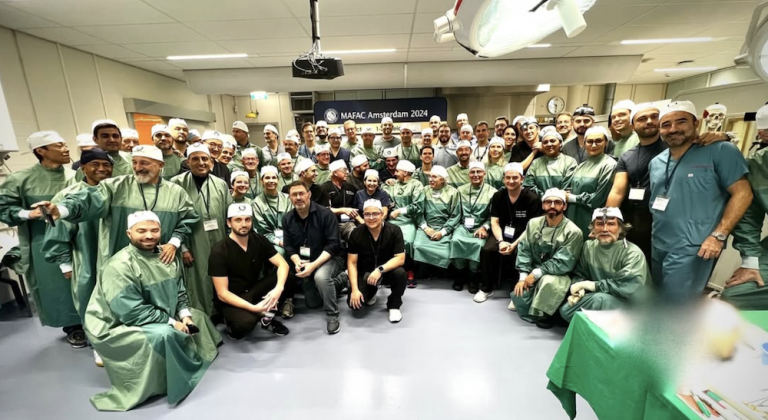
MAFAC Family in Amsterdam

Surgical Insights from MAFAC and QMP Amsterdam 2025

Dr Rodrigo Teixeira reflects on facial anatomy education, facelift surgery and key surgical insights from MAFAC and QMP Amsterdam 2025.
Read More →
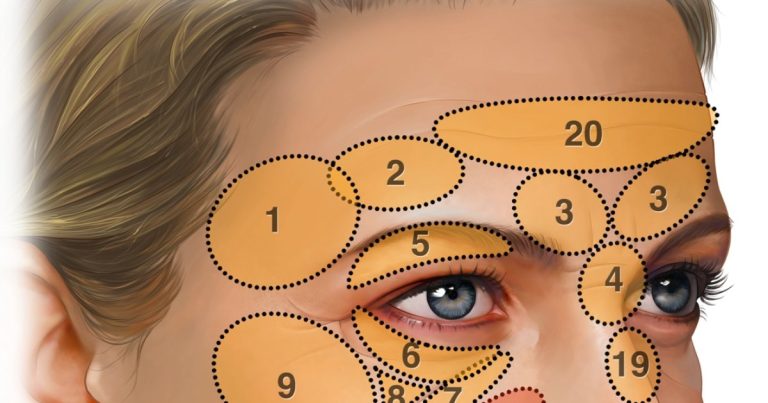
Illustration of the face showing 20 numbered regions where fat grafting may be placed

Facelift Surgery with Fat Transfer: Addressing Facial Volume Loss

Learn how facial fat transfer may complement facelift surgery to restore volume and facial balance. Dr Rodrigo Teixeira discusses this combined approach in Melbourne.

Read More →
Close-up of a woman's upper eyelid

Exploring Upper Eyelid Surgery: Common Concerns, Timing, Expectations and Recovery

Common concerns about upper eyelid surgery, when it may be considered, what to expect on the day and how recovery usually progresses.
Read More →
Scroll to Top