Endoscopic Facelift in Melbourne
Dr Rodrigo Teixeira FRACS, Specialist Plastic Surgeon
An endoscopic facelift may be considered when descent of the brow, temple and upper midface contributes to a heavy or tired appearance around the eyes. Small hairline incisions and a fine camera (endoscope) allow the deeper tissues to be released and repositioned, then secured to stable points with internal fixation, supporting contour and balance while keeping scars discreet. Each operation is planned around the individual’s anatomy, with the brow, eyelids and cheek assessed together rather than in isolation, as part of a practice focused on facial plastic surgery in Melbourne.
What is an Endoscopic Facelift
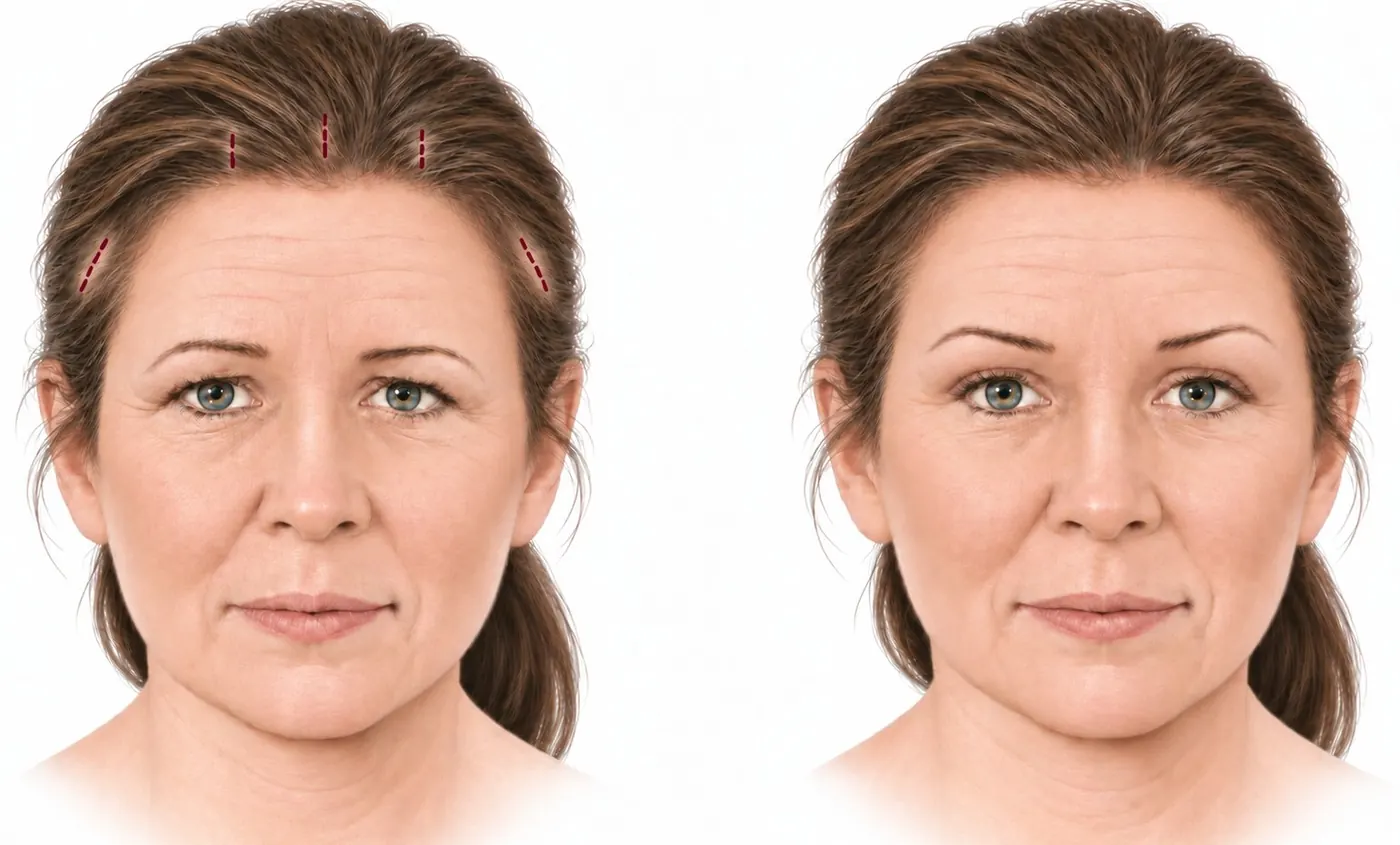
An endoscopic facelift is a surgical procedure that uses small hairline incisions and a fine camera (endoscope) to visualise and carefully release retaining ligaments before repositioning the deeper facial tissues. Internal fixation with sutures or suspension methods secures these layers to stable points, improving contour and balance while minimising tension on the skin. Incisions are placed within the hairline so they remain as discreet as possible.
The approach is anatomy-led. Rather than treating the brow, eyelids or cheek in isolation, the upper face is assessed as a unit, and the plan is tailored to which structures have descended and how much skin quality allows. This is one of several facelift techniques used in the practice, and suitability is confirmed at consultation.
Learn more about Dr Rodrigo Teixeira and his approach to facial plastic surgery and patient care.
Concerns Addressed by an Endoscopic Facelift
The endoscopic facelift is generally considered for early to moderate changes in the upper and midface. It may help with:
- Drooping of the brows or temples
- Descent of the cheeks leading to midface flatness
- Early heaviness of the lateral brow affecting the upper eyelids
- A tired or heavy look around the eyes
In some cases, the endoscopic facelift can also be combined with autologous facial fat transfer to restore volume and support contour, or with upper blepharoplasty (eyelid surgery) when excess upper eyelid skin is present.
Surgical approach to the endoscopic facelift
Dr Rodrigo Teixeira is a Specialist Plastic Surgeon (FRACS) whose practice is focused on facial plastic surgery, with training in craniofacial surgery and aesthetic facial surgery. Endoscopic procedures are planned around the individual’s anatomy, the position of the brow and midface soft tissues, and the quality of the overlying skin.
Surgery uses current endoscopic techniques with secure internal fixation for support and stability. Each patient is cared for by a surgical and nursing team in an accredited private hospital, and follow-up continues through the recovery period. Realistic expectations, safety and a natural-looking result are discussed openly at consultation, along with the alternatives, so that the decision to proceed is an informed one.
Endoscopic Facelift Techniques and Variations
Endoscopic techniques can be tailored to different regions of the face, depending on what is driving the change and which areas require support.
Endoscopic brow lift
Targets the brow and forehead region. It may be considered when there is brow heaviness or early descent contributing to a tired or closed appearance of the upper face.
Endoscopic temporal lift
Focuses on the outer brow and temple area. It may be considered when the lateral brow and upper cheek region are beginning to descend, and a subtle lift of the outer upper face is the priority.
Endoscopic mid-cheek (midface) lift
Addresses descent through the midface and cheek. In selected patients, it can reposition midface soft tissues to improve cheek contour and soften changes around the lower eyelid–cheek junction. It is generally most suitable when skin quality is good and excess skin is limited.
Endoscopic lift combined with a mini facelift
In selected patients with early lower-face ageing, an endoscopic plan (upper/midface) may be combined with a limited lower-face lift to improve jawline definition while keeping the overall approach more targeted. Suitability depends on skin laxity and the degree of neck involvement.
Overall, endoscopic approaches are generally best suited to patients with good skin quality and minimal excess skin, where the goal is subtle lifting and structural support rather than skin removal. When lower-face and neck changes are more advanced, particularly where there is greater laxity or submental fullness, a more comprehensive facelift plan may be considered, including deep plane or extended deep plane approaches in suitable candidates where additional neck treatment is needed. For a broader overview of options, see Facelift Surgery in Melbourne.
Who may be suitable for an endoscopic facelift
An endoscopic approach tends to suit people, often between their late thirties and fifties, who have noticed the brow, temple or upper cheek beginning to descend, with a heavy or tired look around the eyes, but who still have good skin elasticity and little excess skin. Because the technique repositions the deeper tissues rather than removing skin, it is a poor match for marked skin laxity.
Assessment considers where the change is coming from. Lateral brow heaviness that makes the upper eyelids look full may be better treated by supporting the brow than by removing eyelid skin alone, and in some people both are needed. When the main concerns are the jawline and neck, an endoscopic lift will not address them, and a deep plane facelift or a combined plan is discussed instead. A conventional open brow lift may be preferred when the hairline is already high or when skin needs to be removed.
General health, smoking, medications that affect bleeding and previous facial surgery are all taken into account, and expectations are talked through openly before any decision is made.
The day of surgery
An endoscopic facelift is performed under general anaesthetic in an accredited private hospital, with a specialist anaesthetist, and involves an overnight stay. On its own the operation usually takes two to three hours. When upper blepharoplasty is added, allow about an hour more, and when facial fat transfer is included, about an hour and a half more, so a combined procedure may take four to five hours.
You are admitted on the morning of surgery. Markings are made with you sitting upright, the plan is confirmed and the anaesthetist reviews you before theatre. The incisions are placed within the hair-bearing scalp, so only small areas of hair are parted rather than shaved. Afterwards a light head dressing is applied, and a drain is occasionally used overnight.
The following morning the dressing is checked and, once you are comfortable, eating and walking, you go home with written aftercare instructions and a review booked for five to seven days later. Someone should drive you home and stay with you for the first night.
Recovery After an Endoscopic Facelift
Recovery varies between individuals and depends on the extent of surgery and the healing response. Because the incisions are small and hidden in the hairline, recovery is generally shorter than after a conventional facelift, although the deeper tissues continue to settle for several months.
First few days: swelling and bruising peak around the eyes, brow and cheeks. Sleeping with the head elevated and using cool packs for the first 72 hours helps. Discomfort is usually mild and managed with simple analgesia.
Week 1: sutures or clips in the hairline are removed at the first review, usually at five to seven days. Gentle walking is encouraged; hair can be washed carefully once cleared to do so.
Weeks 2–3: most bruising has faded and swelling has settled enough for many people to return to work and social activities, often with the help of some make-up. Strenuous exercise, heavy lifting and bending are avoided for at least two weeks.
Weeks 4–6: exercise can generally be resumed. Numbness or tingling of the scalp behind the incisions is common and usually improves over weeks to months.
Three months and beyond: residual swelling resolves, the tissues soften and the brow and midface settle into their final position. Scar care, sun protection and attending follow-up appointments all support a good outcome. Written aftercare instructions are provided, and the team monitors progress closely.
Risks and Safety Considerations of an Endoscopic Facelift
As with any surgical procedure, an endoscopic facelift involves potential risks. These vary depending on your anatomy, skin quality, medical history, and healing response. Outcomes also differ between individuals and cannot be fully predicted in advance.
Common side effects:
- Bruising and swelling
- Temporary numbness or tingling
- Mild asymmetry or contour irregularities
- Itching or tightness around incision sites
Less common risks include: infection or delayed healing, thick or irregular scarring, skin loss (necrosis, more likely in smokers), nerve injury that may cause temporary or permanent weakness, and the possibility of revision surgery. All risks are carefully reviewed during consultation, and written information is provided to support informed decision‑making.
As with any surgical procedure, outcomes vary between individuals. Recovery times and results should be discussed with a qualified specialist before proceeding.
Combining an endoscopic facelift with other procedures
Because the endoscopic lift addresses the position of the brow and midface, it is often planned together with procedures that treat adjacent concerns, so that the upper face is improved as a whole and there is a single anaesthetic and recovery.
Upper blepharoplasty is the most common combination: once the brow is supported, any remaining excess eyelid skin can be removed conservatively. Facial fat transfer is used to restore volume to the temples, cheeks and around the eyes where hollowing contributes to a tired appearance. In selected patients with early lower-face change, a limited lower-face lift is added to improve jawline definition. Where lower face and neck laxity are more advanced, a facelift plan is generally more appropriate than adding to an endoscopic procedure.
Which combination, if any, is right depends on assessment, and the sequence and timing are discussed at consultation.
Our Melbourne Clinic
Unveil Plastic Surgery is situated in Ivanhoe East, approximately 10 km from Melbourne’s central business district. Our clinic, located on Lower Heidelberg Road, has been designed with patient comfort, privacy, and a calm atmosphere in mind. Our consultation spaces are equipped with modern facilities to support detailed examinations, planning, and discussion.
When you arrive, our reception team will welcome you and guide you through each stage of your visit. Whether you’re seeing us for an endoscopic facelift consultation, a follow-up, or treatment, we aim to make your experience attentive and personalised. We offer easy parking nearby and strive to make the clinic accessible to all patients. We acknowledge that choosing surgery or any cosmetic procedure can involve complex emotions and decisions. Our clinic team is here to offer clear information, support, and guidance at every step.
Endoscopic Facelift FAQs
It is carried out through small incisions hidden in the hairline. Using an endoscope for magnified guidance, the retaining ligaments are released and the deeper tissues repositioned to support the brow, temples, cheeks and midface, then fixed to stable points internally. In selected patients the plan is combined with a limited lower-face lift, but the endoscopic technique itself does not remove skin.
An endoscopic facelift repositions the deeper tissues of the upper and midface through hairline incisions and does not remove excess skin, so it suits earlier changes and good skin quality. A deep plane or traditional facelift is a more extensive operation that also addresses laxity and skin excess in the lower face and neck. Assessment determines which approach, or combination, is appropriate.
It is most often considered by people in their late thirties to fifties with early to moderate descent of the brow, temple or midface, good skin elasticity and little excess skin. Non-smokers in good general health with realistic expectations tend to do best. When there is significant skin excess, or the main concern is the jawline and neck, another technique is usually more suitable. Suitability is confirmed at consultation.
An endoscopic facelift is performed under general anaesthetic in an accredited private hospital with a specialist anaesthetist, and includes an overnight stay. The procedure alone usually takes two to three hours; adding upper blepharoplasty takes about an hour longer and facial fat transfer about an hour and a half longer. You are reviewed the next morning before going home with written aftercare instructions.
Swelling and bruising are most noticeable in the first few days and settle substantially over two weeks. Hairline sutures come out at five to seven days, and most people return to work and social activities within two to three weeks. Exercise can usually resume at four to six weeks. Scalp numbness behind the incisions is common and improves over weeks to months, while the deeper tissues continue to settle for several months.
The repositioning of the deeper tissues is durable, and the natural ageing process simply continues from a better starting point rather than returning to where it was. Longevity depends on skin quality, sun exposure, smoking, weight changes and genetics. Many people find the improvement in brow and midface position lasts for years, and later procedures, if wanted, can build on the earlier surgery.
The incisions are short, usually three to five, and sit entirely within the hair-bearing scalp behind the hairline and in the temples. Once healed they are generally difficult to find. There is a small risk of thinning of the hair around an incision or a slightly wider scar, particularly if healing is slow. Scar care and sun protection are discussed as part of aftercare.
As with any surgery there are risks, including bleeding, infection, delayed healing, scarring, asymmetry or contour irregularity, numbness of the scalp or forehead, hair thinning around incisions, and temporary or, rarely, permanent weakness of the forehead muscles from nerve injury. Relapse of tissue position and the need for revision surgery are also possible. These are discussed in detail at consultation and written information is provided.
Yes. It is commonly combined with upper blepharoplasty when excess eyelid skin remains after brow support, with facial fat transfer to restore volume in the temples, cheeks or around the eyes, and in selected patients with a limited lower-face lift. Combining procedures means one anaesthetic and one recovery, and is planned at consultation.
The total cost has several components: the surgeon’s fee, the anaesthetist’s fee, the hospital fee and follow-up care. It varies with the areas treated, whether procedures are combined and the time in theatre. Cosmetic surgery does not attract a Medicare rebate or health fund cover. A written, itemised quote is provided after consultation once the plan is clear.
Unveil Plastic Surgery is in Ivanhoe East, about 10 kilometres from Melbourne’s central business district, on Lower Heidelberg Road. The clinic is easily reached by car or public transport and there is parking close by. Consultations, pre-operative planning and follow-up appointments are all held here, while surgery takes place in an accredited private hospital.
Facial Surgery Blog
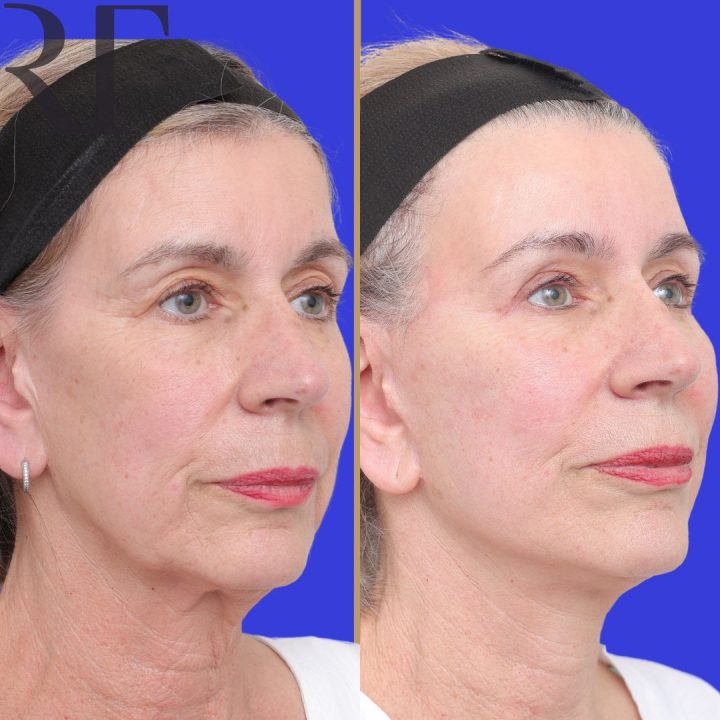
What Is a Deep Plane Facelift and How Is It Different?
Facial Cosmetic Surgery Global Education and Surgical Insights from Amsterdam 2025

Facelift Surgery with Fat Transfer: Addressing Facial Volume Loss
Teaching, Learning and Deep Plane Facelift Surgery: What MAFAC Has Taught Me

What is an Endoscopic Midface Lift (Ponytail Facelift)?