


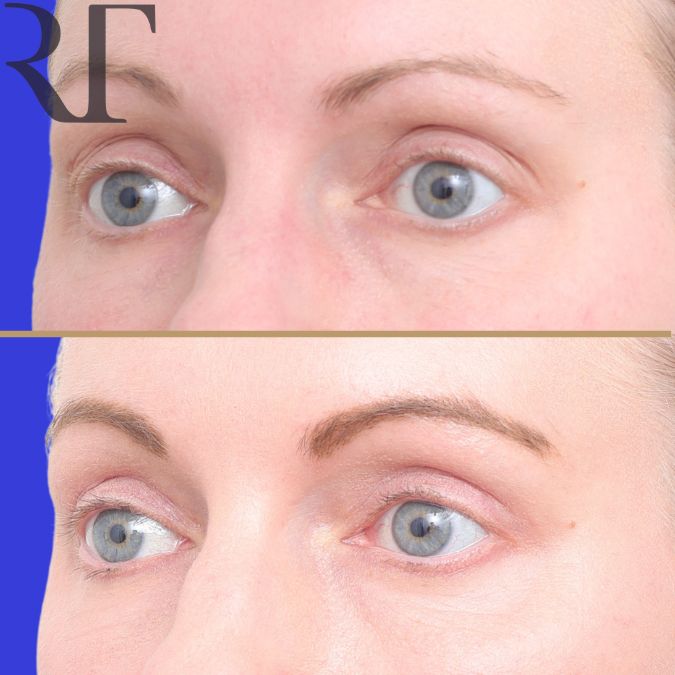
Eyelid Surgery in Melbourne

Blepharoplasty is surgery to reshape the upper eyelids, lower eyelids, or both by removing or repositioning tissue. Similar concerns can have different underlying causes, so consultation and examination help clarify what is contributing, which options may suit the anatomy, and the likely risks and recovery. Dr Rodrigo Teixeira is a Specialist Plastic Surgeon in Melbourne who takes an anatomy-led approach to eyelid surgery planning.

Why eyelid surgery may be considered

The eyelids sit between the brow, the eye, and the cheek, and changes in this area are often influenced by several factors rather than one feature alone. Over time, genetics, skin quality, facial structure, and natural tissue descent can affect how the eyelids rest and move.

In the upper eyelids, this may appear as heaviness, hooding, or a less visible crease. In the lower eyelids, it may present as under-eye fat bags, loose skin, or an orbital hollowing that creates shadowing.

Blepharoplasty may be considered when these changes affect contour, eye comfort, or overall facial balance. Similar concerns may have different underlying causes, including excess upper eyelid skin, brow descent, ptosis, fat prolapse, lower lid laxity, or tear-trough hollowing. A consultation helps clarify what is contributing and supports a tailored discussion of options, limitations, risks, recovery, and suitability.

Dr Rodrigo Teixeira (FRACS) specialist plastic surgeon in Melbourne

Learn more about Dr Rodrigo Teixeira and his approach to plastic surgery and patient care.

Dr Rodrigo Teixeira’s approach

Dr Rodrigo Teixeira is a Specialist Plastic Surgeon (FRACS) with a practice focus on facial plastic surgery. His fellowship training includes aesthetic plastic surgery and craniofacial and cleft surgery, supporting an anatomy-led approach to facial structure, soft tissues, and surgical planning. His clinical work includes eyelid surgery as part of facial plastic surgery practice.

Planning begins with assessment of eyelid anatomy, brow position, eyelid support, and eye surface health. The approach aims to balance form and function and maintain natural eyelid contour. In selected cases, a tissue-preserving plan may be preferred, as excessive removal of skin or fat can sometimes contribute to hollowing or tightness over time. Adjunct procedures may be discussed where indicated to address the underlying cause.

Assessment first: what is causing the concern?

Concerns usually fall into upper-lid, lower-lid, or combined patterns. Similar concerns can look alike in the mirror or in photos, even when the underlying cause is different.

Assessment may include:

  • eyelid contour and position
  • brow position
  • eyelid support and movement
  • eye surface health, including dryness
  • visual symptoms where relevant
  • prior eye or eyelid surgery
  • general medical history relevant to healing and surgical planning

This helps clarify what is most likely driving the concern and which options may be appropriate.

Upper eyelid concerns

Upper eyelid concerns are often described as “heavy” or “hooded” lids. Common signs include a skin fold sitting closer to the lashes, a less visible crease, or eyes that look more tired in photos.

Some people notice:

  • eyeshadow becomes less visible
  • eyeliner or mascara transfers more easily
  • heaviness builds through the day
  • a habit of lifting the brows to feel more open
  • forehead tension from compensating
  • reduced awareness in the upper visual field in some cases

When upper lids are the main concern, upper blepharoplasty may be discussed depending on the cause, such as skin excess, brow position, or true ptosis.

Learn more: Upper Blepharoplasty in Melbourne

Lower eyelid concerns

Lower eyelid concerns are often described as “bags”, “puffiness”, or “dark circles”, although these terms can reflect different underlying factors. Common signs include under-eye fullness, a deeper lid–cheek groove that creates shadowing, or fine creasing that becomes more visible when smiling.

Puffiness may fluctuate and can appear worse:

  • in the morning
  • with allergies
  • after salty meals or alcohol
  • when sleep is poor

Assessment may consider fullness, hollowing, lower lid support, skin quality, and the role of fat pads in lower eyelid contour. When lower lids are the main concern, lower blepharoplasty may be discussed after assessment of the main contributing factors.

Learn more: Lower Blepharoplasty in Melbourne

Treatment options

After assessment, treatment options may include:

  • upper eyelid surgery
  • lower eyelid surgery
  • a combined approach when concerns involve both the upper and lower eyelids
  • brow lift surgery where brow position contributes to upper eyelid heaviness or hooding
  • fat grafting where volume loss or a deeper lid–cheek transition contributes to hollowing or shadowing

The aim is to match the plan to the underlying cause while preserving eyelid support, eye comfort, and natural facial balance.

Where appropriate, adjunct procedures may also be discussed. These may include ptosis correction, brow support procedures, lower eyelid support techniques, or selected approaches to the lid–cheek transition, including fat repositioning or fat grafting.

Dr Rodrigo Teixeira

Risks and Considerations

As with any surgical procedure, blepharoplasty involves risks and individual outcomes vary. While many patients recover without major issues, results cannot be guaranteed.

Complications are uncommon but may include:

  • bruising, swelling, or temporary asymmetry
  • infection or delayed healing
  • temporary irritation, dry eyes, or tightness
  • difficulty closing the eyes fully during early recovery
  • changes in eyelid contour or mild scarring

Rare complications can include bleeding, eyelid malposition, or vision disturbance. Individual factors, such as dry eye symptoms, prior eye surgery, or relevant medical history, are reviewed during consultation as part of surgical planning.

What to expect during recovery

Recovery after eyelid surgery varies depending on the procedure performed, the surgical plan, general health, and individual healing response. Blepharoplasty is often performed as a day procedure, and recovery advice is tailored to the area treated and the needs of the individual patient.

Common recovery advice may include:

  • resting with the head elevated in the early recovery period
  • using cold compresses as directed
  • avoiding bending, heavy lifting, or strenuous activity at first
  • reducing screen time or reading if the eyes feel strained
  • protecting the healing area outdoors with sunglasses
  • attending scheduled follow-up appointments

Swelling, bruising, and tightness are common in the first week after surgery and often improve over 7 to 10 days, although residual swelling may take longer to settle. Return to light work or social activities varies, and scar maturation and subtle refinements continue over time.

Upper Blephs before and after

Eyelid Surgery – Before & After Gallery

Our Clinic in Ivanhoe East, Melbourne

Unveil Aesthetics and Plastic Surgery is located in Ivanhoe East, around 10 kilometres from Melbourne’s CBD. Our clinic on Lower Heidelberg Road is easily accessed, with convenient parking nearby, and provides a calm, welcoming environment designed for comfort and discretion.

On arrival, the reception team assists with check-in and helps coordinate appointments. Care is centred on clear communication, appropriate pre-operative assessment, and structured follow-up after surgery.

Eyelid Surgery FAQs

Not always. A heavy or hooded appearance may relate to excess skin, brow descent, or true eyelid ptosis (a lower eyelid margin). Assessment helps clarify the main contributor.

Not always. Puffiness can relate to fat prolapse, but shadowing can also be driven by tear-trough hollowing, skin quality, and cheek support. More than one factor may be present.

In some cases, excess upper eyelid skin can reduce the upper field of vision. A clinical assessment is needed to determine whether concerns are functional, cosmetic, or a combination.

The aim is usually to improve eyelid contour while preserving eyelid support and eye protection. During healing, swelling and tightness can temporarily change appearance. Longer-term changes in contour are a known risk and are discussed during consultation.

Recovery varies. Swelling and bruising are common early and typically improve over the first 1–2 weeks, while more subtle swelling can take longer to settle. Timelines differ between upper and lower eyelid surgery.

A combined approach may be discussed when concerns involve both the upper and lower eyelids, such as upper lid hooding alongside under-eye bags or shadowing, based on anatomy, eye health, and recovery planning.

Plastic Surgery Blog

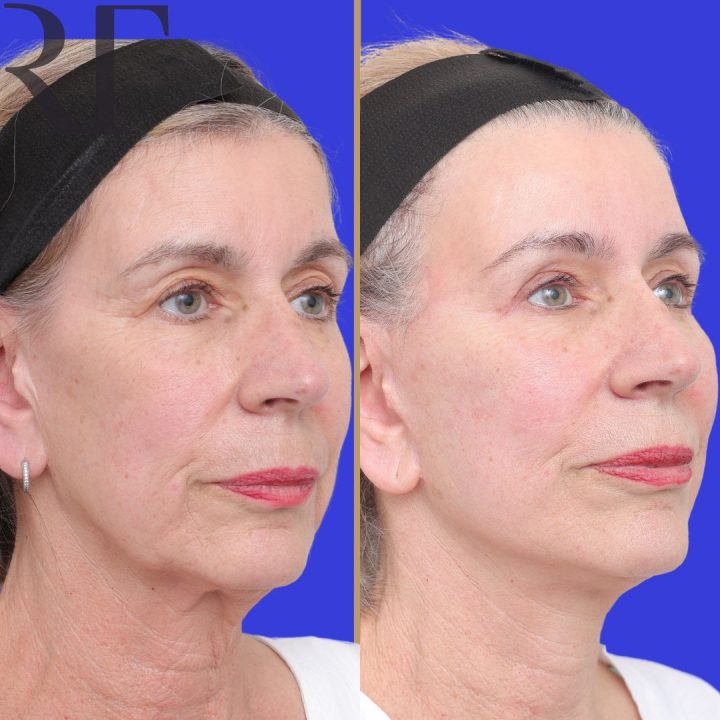
Melopasty - Deep Plane Facelift before and after photos

What Is a Deep Plane Facelift and How Is It Different?

Learn how facial fat transfer may complement facelift surgery to restore volume and facial balance. Dr Rodrigo Teixeira discusses this combined approach in Melbourne.
Read More →
2019-MAFAC-735-scaled.jpg

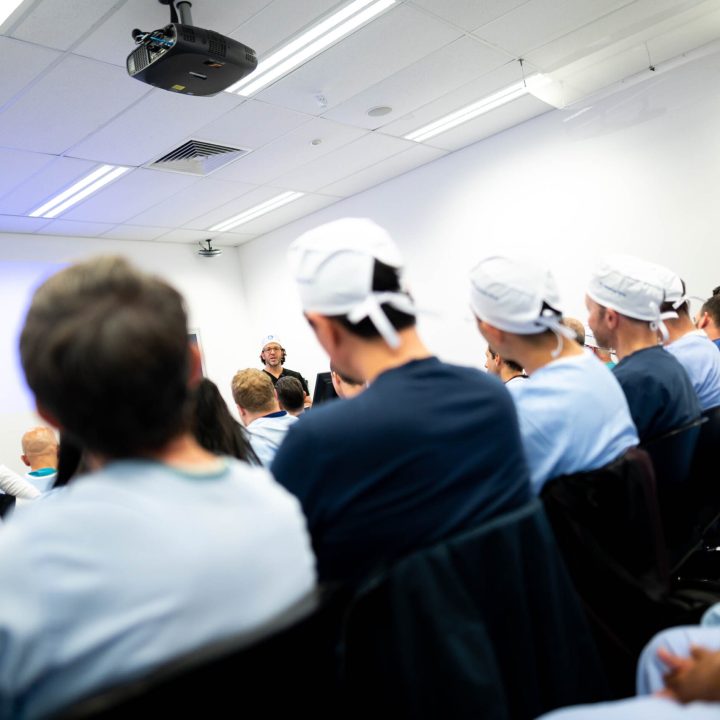
Facial Cosmetic Surgery Global Education and Surgical Insights from Amsterdam 2025

Learn how facial fat transfer may complement facelift surgery to restore volume and facial balance. Dr Rodrigo Teixeira discusses this combined approach in Melbourne.

Read More →
Maximising-FaceLift-SQ500.jpg

Facelift Surgery with Fat Transfer: Addressing Facial Volume Loss

Learn how facial fat transfer may complement facelift surgery to restore volume and facial balance. Dr Rodrigo Teixeira discusses this combined approach in Melbourne.
Read More →
Dr-Rodrigo-Teixeira-at-MAFAC-Mayo

Teaching, Learning and Deep Plane Facelift Surgery: What MAFAC Has Taught Me

The Mendelson Advanced Facial Anatomy Course (MAFAC), previously known as the Melbourne Advanced Facial Anatomy Course, is much more than a course. It is a ...

Read More →
JasperArt

What is an Endoscopic Midface Lift (Ponytail Facelift)?

At Unveil Plastic Surgery, we provide clarity on the endoscopic midface lift (sometimes referred to as a “ponytail lift” or “ponytail facelift”). This is not ...
Read More →
Lip-Lifts

Is a Lip Lift Right for Me? A Patient Guide

A lip lift is a surgical procedure that shortens the skin between the nose and the upper lip (the philtrum), often to increase upper tooth ...
Read More →
Scroll to Top