


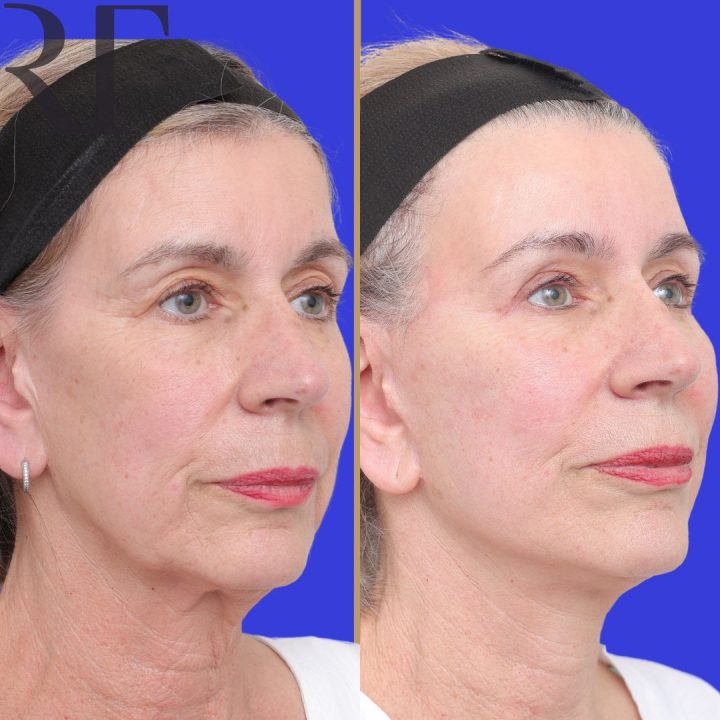
Facial Fat Transfer Melbourne

Facial fat transfer, also known as facial fat grafting, is a surgical technique that uses a person’s own fat to restore volume and soften age-related contour changes. As a treatment option for facial fat grafting in Melbourne, it may help address areas of hollowing, soften transitions between facial regions, and support overall facial balance. A consultation allows your surgeon to assess suitability and discuss treatment options based on your goals, anatomy, and medical history.

What Is Facial Fat Transfer?

Facial fat transfer involves collecting a small amount of fat from another area of the body, refining it, and injecting it into selected areas of the face. The procedure typically begins with fat harvesting from areas such as the abdomen, thighs, or flanks. The collected fat is then purified to remove excess fluid, oils, and damaged cells, leaving a refined graft suitable for reinjection.

Because the tissue comes from your own body, the risk of rejection is low. Face fat grafting is sometimes chosen by people who prefer an autologous (self-derived) option rather than synthetic volumisation, or implants. It is a surgical procedure, and all surgery carries risks. This approach to fat transfer to the face is tailored to individual anatomy and goals, noting that outcomes vary between people.

Dr Rodrigo Teixeira (FRACS) specialist plastic surgeon in Melbourne

Learn more about Dr Rodrigo Teixeira and his approach to plastic surgery and patient care.

Concerns Addressed by Facial Fat Grafting

Facial fat grafting may be used to address age- or structure-related volume changes in both the deep and superficial facial fat compartments. These changes often occur across multiple regions (a “pan-facial” process). Common areas include:

  • Under-eye hollowness, tear trough and shadows around the eyes
  • Midface flattening and reduced cheek projection
  • Nasolabial folds and marionette lines
  • Temporal and pre-auricular hollowing
  • Early contour changes along the jawline

Fat grafting is a volume-restoration technique. It restores soft-tissue volume but does not replicate the structural effect of bone or implants. Suitability depends on whether volume loss rather than skeletal support, contributes to your concerns.

Some transferred fat may integrate once a blood supply develops, but the amount that remains varies between individuals.

How facial fat grafting compares with temporary volumising options

Non-surgical volumising treatments use temporary products that gradually reduce over time as they are absorbed by the body. Fat grafting uses your own transferred fat, which behaves differently because it is living tissue. Fat may provide longer-lasting volume in areas where it survives, while temporary options gradually diminish. Each approach has benefits and limitations depending on anatomy, goals, and treatment preferences.

The Facial Fat Transfer Procedure

Facial fat transfer involves three main steps:

1. Fat Harvesting

Fat is gently collected from areas such as the abdomen or thighs. Research suggests that donor site choice does not appear to significantly affect fat cell viability, so the decision is usually based on patient preference and available tissue. Local anaesthetic solutions are used to support comfort and assist with the harvesting process.

2. Processing and Refinement

The harvested fat is processed to remove excess fluid, oils, and damaged cells, leaving a concentrated graft. Techniques vary, but generally involve separation and refinement to prepare different fat consistencies, structural fat, microfat, and nanofat. This step helps create a graft suitable for the intended facial layers.

3. Placement

Fat is injected using fine cannulas in small droplets across multiple passes and layers. This technique supports even distribution and encourages graft contact with healthy tissue. Different areas may require placement of fat at different depths, from deep subcutaneous or pre-periosteal layers to superficial layers for fine-line treatment. A staged approach may be discussed for individuals with widespread or advanced volume loss.

As with any surgical procedure, outcomes depend on individual anatomy, healing, and fat survival.

Dr Rodrigo Teixeira’s Approach to Facial Fat Transfer

Dr Teixeira plans facial fat transfer using an anatomical assessment of both deep and superficial fat compartments to identify where true volume loss is contributing to facial changes. He prefers closed fat-handling systems to help limit exposure to air and reduce the risk of contamination or oxidation. The harvested fat is then processed using adipose micronising devices (adnizers) to prepare structural fat, microfat, and nanofat for different treatment layers.

He applies a layered technique, placing structural fat in deeper planes for support, microfat to refine contour transitions, and nanofat in superficial layers to trace fine lines and support skin quality through regenerative mechanisms. This approach aims to match the fat consistency to the goals of each area, while respecting natural anatomical boundaries. Individual healing characteristics influence the degree of fat survival and overall outcome.

Dr Rodrigo Teixeira

Risks & Safety Considerations of Facial Fat Grafting

All surgical procedures involve risks. Common temporary effects include swelling, bruising, and mild numbness in both donor and recipient sites. These usually settle over days to weeks.

Less common risks may include:

  • asymmetry
  • over- or under-correction
  • fat necrosis or small lumps
    infection
  • contour irregularities
  • changes in fat survival

Vascular safety is an important part of the procedure. Techniques such as using blunt cannulas, slow injections, and careful anatomical planning support safe practice. Individual results vary.

Recovery & Aftercare

Recovery varies, but many people experience the following pattern:

First few days

Swelling, bruising, and tenderness are expected. Keeping the head elevated and using cold compresses (as advised) may assist comfort.

Weeks following treatment

Bruising typically fades over one to two weeks. Swelling usually reduces over two to three weeks, with some areas taking longer to settle. Light activities can resume as advised by your surgeon.

General recommendations

  • Sleep with your head elevated
  • Avoid smoking
  • Avoid pressure or massage to treated areas
  • Delay strenuous exercise until cleared
  • Avoid saunas and steam rooms
  • Attend scheduled follow-up appointments

Follow-up appointments allow your surgeon to monitor healing and discuss any required adjustments.

Our Melbourne Clinic

Our clinic, located in Ivanhoe East, provides a professional and supportive environment. Patients have access to comfortable consultation and treatment areas, as well as a team of attentive staff who assist throughout the pre- and post-treatment phases.

What to Expect at Your Consultation

A consultation offers the chance to discuss your goals and understand whether facial fat transfer is appropriate for your concerns. During the appointment, your surgeon will:

  • Review your medical history
  • Perform a detailed facial assessment and photographic analysis
  • Discuss areas of volume loss and potential treatment strategies
  • Outline risks, benefits, and what the procedure involves
  • Provide a cost estimate and treatment plan
  • Review informed-consent requirements and pre-operative considerations

FAQs

Fat that survives the early healing phase may integrate long-term, though outcomes vary between individuals.

Costs depend on the areas treated, the required volume, and whether additional procedures are planned. A personalised quote is provided during consultation.

Some transferred fat may remain long-term, but fat survival differs between individuals.

All surgery carries risks. When performed by a qualified surgeon using appropriate techniques, facial fat transfer is generally considered safe.

A surgical procedure that uses your own fat to address facial volume loss and support facial contours.

Mild discomfort is common in the early days after surgery but usually settles with time.

Suitability depends on your anatomy, goals, and the areas being treated. Both options have different indications and limitations.

Initial swelling improves within the first few weeks, and final contour refinement may take several months.

Brow Lift Surgery Blog

Melopasty - Deep Plane Facelift before and after photos

What Is a Deep Plane Facelift and How Is It Different?

Learn how facial fat transfer may complement facelift surgery to restore volume and facial balance. Dr Rodrigo Teixeira discusses this combined approach in Melbourne.

Read More →
2019-MAFAC-735-scaled.jpg

Facial Cosmetic Surgery Global Education and Surgical Insights from Amsterdam 2025

Learn how facial fat transfer may complement facelift surgery to restore volume and facial balance. Dr Rodrigo Teixeira discusses this combined approach in Melbourne.

Read More →
Maximising-FaceLift-SQ500.jpg

Facelift Surgery with Fat Transfer: Addressing Facial Volume Loss

Learn how facial fat transfer may complement facelift surgery to restore volume and facial balance. Dr Rodrigo Teixeira discusses this combined approach in Melbourne.
Read More →
Dr-Rodrigo-Teixeira-at-MAFAC-Mayo

Teaching, Learning and Deep Plane Facelift Surgery: What MAFAC Has Taught Me

The Mendelson Advanced Facial Anatomy Course (MAFAC), previously known as the Melbourne Advanced Facial Anatomy Course, is much more than a course. It is a ...

Read More →
JasperArt

What is an Endoscopic Midface Lift (Ponytail Facelift)?

At Unveil Plastic Surgery, we provide clarity on the endoscopic midface lift (sometimes referred to as a “ponytail lift” or “ponytail facelift”). This is not ...

Read More →
Taking pain killers

Pain Management After Plastic Surgery

Pain and discomfort are common in the first days after plastic surgery. The level and duration of pain depend on the type of procedure, the ...
Read More →
Scroll to Top